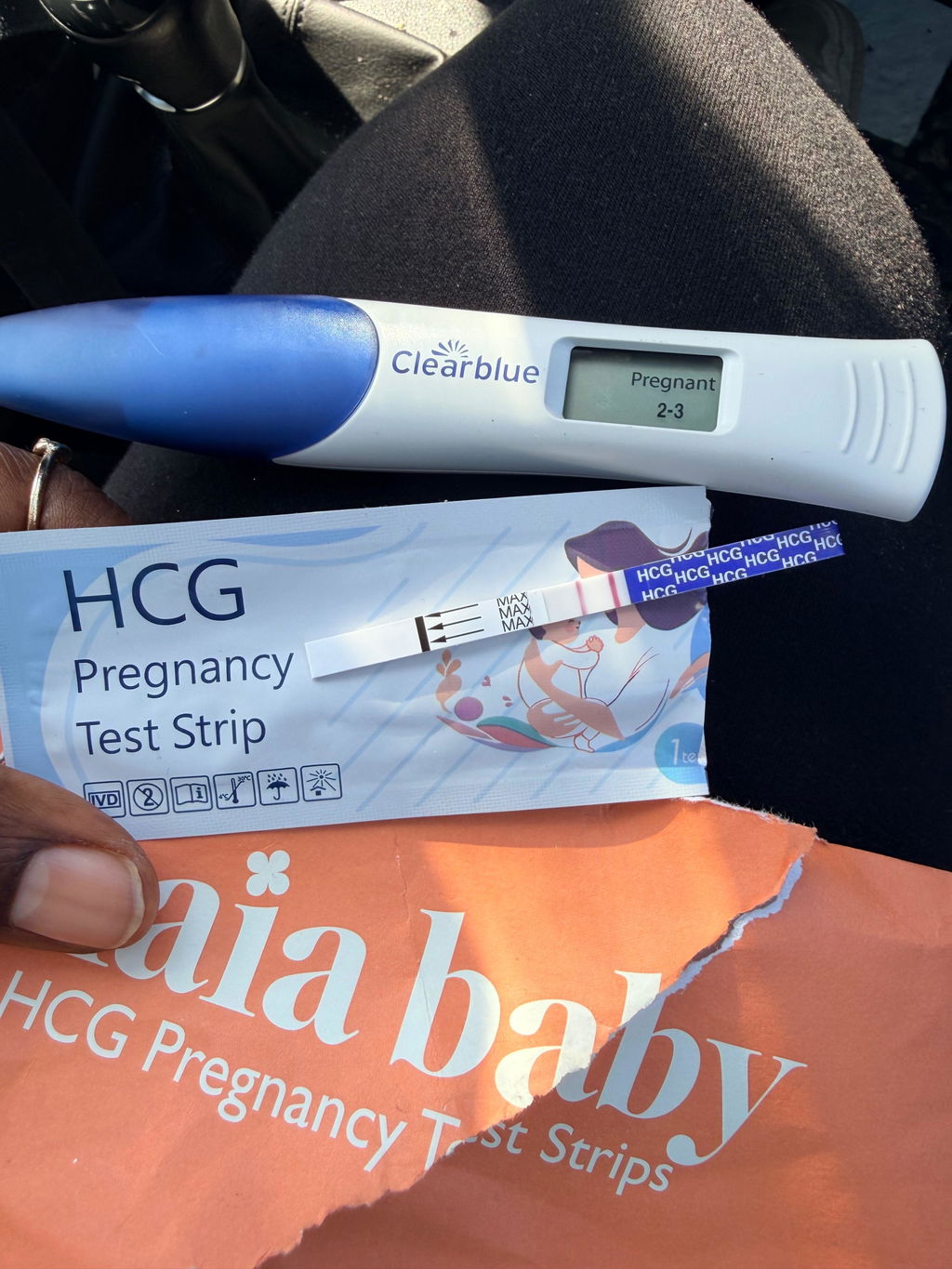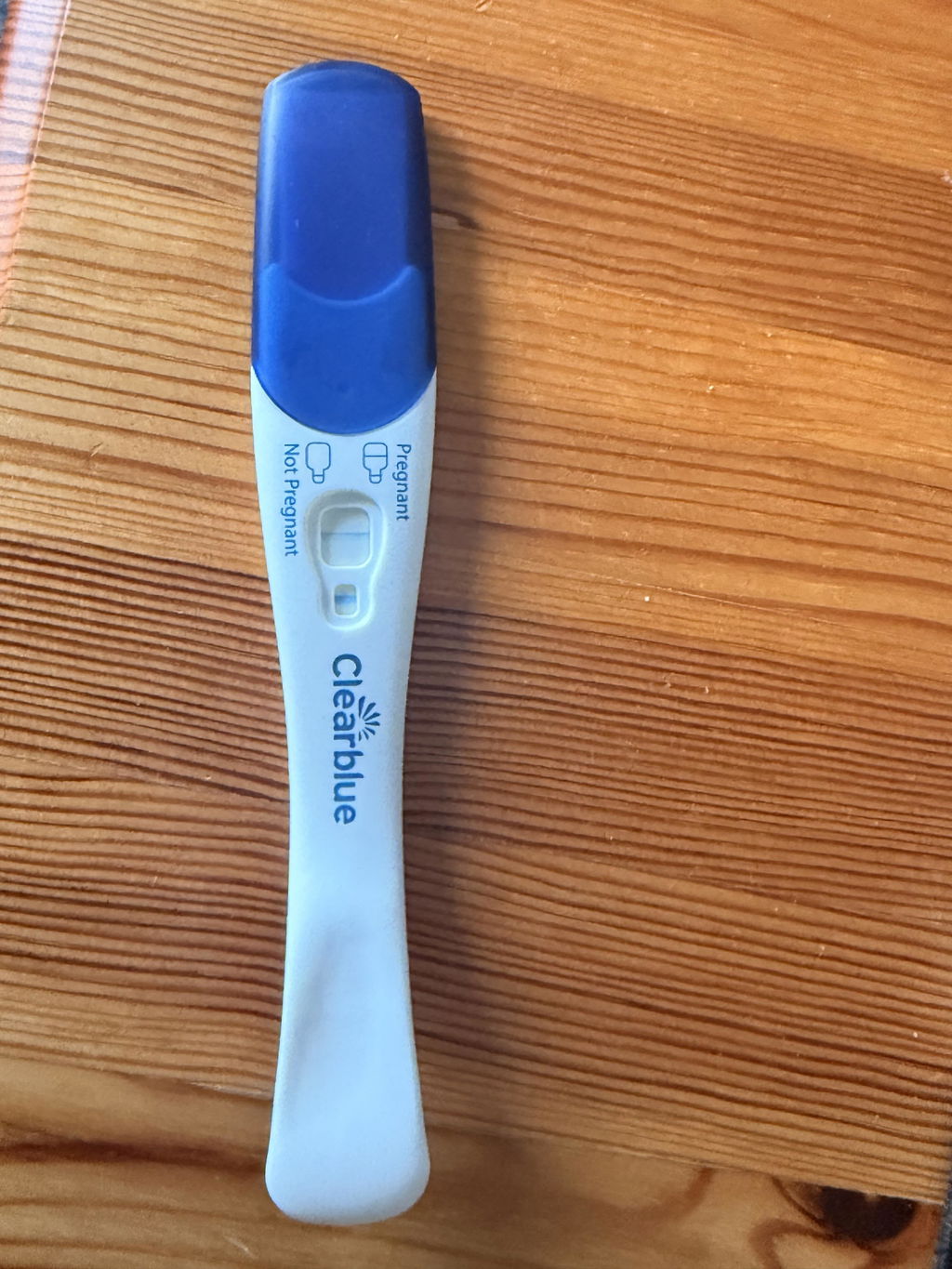


You take the test, wait, and there it is: a line so faint you have to tilt it toward the light to be sure it's really there. Is that a positive, or is it an evaporation line playing tricks on you? The two can look almost identical at a glance, and searches for exactly this question spike every single day, but the real difference comes down to a handful of concrete, checkable facts, not guesswork.
What Is an Evaporation Line?
An evaporation line, usually just called an evap line, is a line that can appear in a pregnancy test's result window after the urine on the test strip has dried out. It contains no dye and is not caused by hCG (human chorionic gonadotropin, the hormone pregnancy tests actually detect). Instead, as the liquid evaporates, it can leave a faint, colourless residue exactly where a real line would sit, which is why it fools people.
This is precisely why every home pregnancy test on the market specifies a reading window, usually somewhere between 3 and 10 minutes, and explicitly tells you to discard the result after that. A line that shows up before that window closes reflects a real chemical reaction. A line that shows up after it, once the strip has dried, doesn't.
Real evap lines tend to share a few features:
- Grey, colourless, or faintly shadowed rather than pink or blue
- Only visible once the test has fully dried out
- No tint at all, even under bright light
The single most reliable way to avoid mistaking one for a positive is simply timing: read your result within the window printed on the box, and don't go back to check it again later.
What Is a Faint Positive?
A faint positive means the test has genuinely detected hCG in your urine, just at a low concentration. hCG only appears once the embryo has implanted in the uterine lining, and real research on exactly when that happens gives a useful anchor: in a study that tracked daily urine samples from 221 women trying to conceive, implantation most often occurred 8 to 10 days after ovulation, with a real range of 6 to 12 days. Read the study.
hCG only enters your urine after that implantation moment, and it starts low. That's exactly why a faint positive is common in early testing, it usually just means you've caught hCG at the very start of its rise, not that anything is wrong. Faint positives typically show up when:
- You're testing very early, at or just before your missed period
- Your hCG is real but still low, and rising
- You're using a less sensitive test, or your urine is diluted
The genuine tell: a faint positive has actual colour, pink or blue depending on the test's dye, and it appears within the test's stated reading window. Colour plus correct timing is a real positive. Colourless plus late timing is an evap line.
If you'd rather watch this explained than read it, this is a clear real-world walkthrough of exactly that distinction.
When Do Pregnancy Tests Actually Start Detecting hCG?
Every test has a real, published sensitivity threshold, the minimum hCG concentration (in mIU/mL) it can reliably detect, and it's lower than most people realise. A 2005 study that tested seven over-the-counter tests found meaningful differences in how confidently lab staff could read a positive at different real hCG concentrations. Read the study.
Two real, published examples: First Response Early Result's manufacturer-stated sensitivity is 6.3 mIU/mL, while Clearblue's Early Digital test is FDA-cleared (510(k) K200913) at 10 mIU/mL and labelled for use up to 6 days before a missed period. See the FDA clearance letter.

Put together, this is really why "test too early" and "faint line" go hand in hand: you're not doing anything wrong, you're just testing while hCG is still climbing past a real detection threshold, days before it reaches the levels a standard blood test or a missed period would confirm.
Evap Line vs Faint Positive: The Real Differences
Here's the honest, side-by-side version of the comparison, built from the two mechanisms above rather than guesswork.

Here's the same comparison in about 30 seconds, if you want the quick version.
Could This Be an Evap Line or a Faint Positive?
Answer the two questions below using what you actually saw on your test to get a real read on which one you're looking at.


Evap Line or Faint Positive?
Answer these two questions honestly based on what you actually saw, not what you're hoping to see.
Answer both questions above to see the real verdict.
How to Read a Pregnancy Test Accurately
- Use first morning urine. It's the most concentrated urine of the day, which matters most when hCG is still low.
- Follow the instructions for your specific test exactly. Some are dip tests, some are midstream, and reading windows genuinely differ between brands.
- Set a timer. Most tests specify reading between 3 and 5 minutes and discarding the result after 10. Don't check early, and don't go back later.
- Look specifically for colour. A real positive, even a faint one, has visible pink or blue dye. Grey or colourless lines are evap lines, not positives.
- Never re-read a test after the window closes. This is exactly when evap lines tend to appear. Whatever you saw within the window is the real result.
- Use a digital test if you want a clear answer. Digital tests remove the colour-judgement question entirely, they display the word "Pregnant" or "Not Pregnant."
For more on when hCG is actually high enough to test reliably, see our guide on when to take a pregnancy test after ovulation.
The Honest Catch: A Faint Positive Isn't Always the End of the Story
A genuine faint positive means hCG is really there, but it doesn't guarantee how the pregnancy progresses, and it's worth knowing that upfront rather than being caught off guard by it later. Research using blood tests in confirmed viable pregnancies found that even the slowest normal rise was still at least a 53% increase over 48 hours, well short of a full doubling, which is the number most people have heard. Read the study.
That 53% figure is genuinely useful: it's the real minimum, not an average, so it's a fair bar to keep in mind, rather than expecting textbook doubling every single time. A home test strip can't measure the rise itself, only whether hCG is there, so a darker retest is a good sign rather than a measurement. If a retest 48 hours later shows a clearly darker line, that's a real reassuring sign. If it looks the same or lighter, that's worth a conversation with your GP, not a test-strip diagnosis either way.
Common Mistakes to Avoid
- Testing too early. A negative before your missed period can genuinely just mean hCG hasn't risen high enough yet, not that you're not pregnant. See our guide on the best time to try to conceive.
- Drinking a lot of water beforehand. Diluted urine means diluted hCG, which can turn a real faint positive into an apparent negative.
- Using an expired test. Check the date. An expired test's reagents can genuinely misbehave.
- Skipping the instructions. Sample method and timing both vary by brand, and both actually matter.
What to Do If You're Still Not Sure
- Retest in 48 hours. A real faint positive will often look darker, per the real minimum-rise data above.
- Try a different test, or a digital one. A different brand's dye or a digital readout can remove the ambiguity entirely.
- Watch for other early signs. Sore breasts, nausea, fatigue, or implantation bleeding can support a positive reading. See our guide on implantation bleeding.
- Talk to your GP. A blood test can confirm pregnancy directly and far more sensitively than any home test.
Frequently Asked Questions
Can an evaporation line look like a faint positive?
Yes, at a glance. The real difference is colour and timing: a faint positive has genuine pink or blue tint and appears within the test's reading window, while an evap line is colourless or grey and only shows up after the strip has dried.
Is a faint line always a positive?
A faint line with real colour, seen within the test's window, is a genuine positive. If you're still unsure, retesting in 48 hours gives a clearer answer, since real hCG should be measurably higher by then.
How long should I wait to retest after a faint line?
48 hours is the real, evidence-backed window. hCG in a viable pregnancy rises by at least 53% over that time even at its slowest, so a genuine positive will often look darker, though a home strip can't measure the exact rise.
Why do some tests detect pregnancy earlier than others?
Because they have different real sensitivity thresholds. A test like First Response Early Result (6.3 mIU/mL) will pick up lower hCG concentrations, and therefore detect pregnancy earlier, than a less sensitive test.
Key Takeaways
- An evap line is colourless, contains no hCG, and only appears after the test has dried past its reading window.
- A faint positive has real colour and appears within the test's stated window, meaning genuine hCG detection.
- Implantation typically happens 8 to 10 days after ovulation, and hCG only enters your urine after that, which is exactly why early tests often come back faint.
- The real minimum rise for a viable pregnancy's hCG over 48 hours, measured in blood tests, is 53%, not a full doubling, useful context for reading a retest.
Keep Reading
Want more real, evidence-backed guidance on timing and testing?
- When to Take a Pregnancy Test After Ovulation
- Implantation Bleeding: A Complete TTC Guide
- Best Time to Get Pregnant: When to Inseminate for Conception
- Your TTC Glossary: Fertility Terms Made Simple
The Line Itself Isn't the Whole Story
It's easy to stare at a faint line for far longer than is reasonable, holding it up to every light source in the house, convinced the answer is hiding just out of view. The real answer usually comes down to two plain facts you can actually check: was there real colour, and did it show up within the window. Everything else, the implantation timing, the sensitivity thresholds, the retest math, is just the explanation for why that line looks the way it does.
If it's still unclear after all that, a retest in 48 hours or a quick chat with your GP will tell you more than any amount of squinting at a strip ever will.