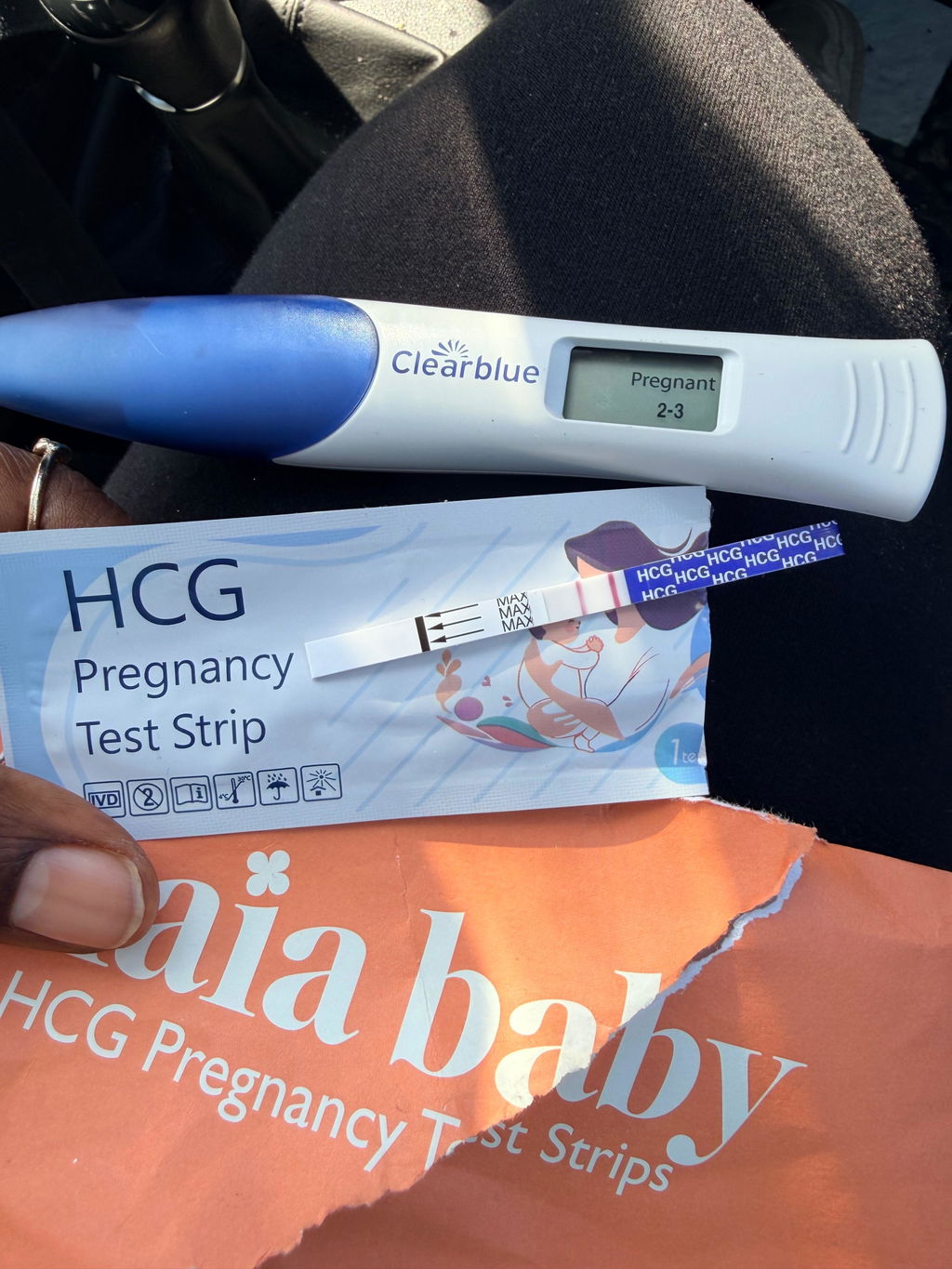


Why am I not getting pregnant? If you've been trying to conceive for a year or more, you've probably already been told to "just relax" more times than you can count. This isn't that article. Here's what actually helped us once "give it time" stopped being useful advice.
Why Am I Not Getting Pregnant? The Point Where "Just Relax" Stops Helping
Around month eight or nine, I remember genuinely thinking something must be wrong with us specifically. Everyone else's timeline seemed to work. Ours didn't, and there was no obvious reason why. Friends were announcing pregnancies that seemed to happen the moment they decided to try, and we were still tracking, still timing things carefully, still waiting.
What I understand now is that not having an answer is its own particular kind of hard, arguably harder than having a diagnosis to work with. A huge number of cases get filed as unexplained, which is a real, common outcome, not a sign you're doing something wrong. There's no test that comes back and tells you exactly what to fix. You're just left trying again, month after month, without a clear reason why it isn't working yet.

You're genuinely not alone in this, and the real UK numbers back that up rather than just being a comforting thing to say. The HFEA's own key facts page and the ONS's real conception data are worth a look if you want the actual scale of it, not just a vague sense that "lots of people struggle." Tens of thousands of people go through IVF at licensed UK clinics every single year. It's not rare. It's just rarely talked about openly.
What Can Actually Cause This
Before we got any testing done, "unexplained" felt like a non-answer. It helped to actually understand what testing is looking for in the first place, even before we had our own results. According to the NHS's own page on the causes of infertility, the most common cause in women is an ovulation disorder, things like PCOS, thyroid problems, or premature ovarian failure. Endometriosis, fibroids, scarring from previous surgery, and cervical mucus problems can all play a role too. On the male side, it usually comes down to semen quality: sperm count, movement, or shape. Roughly as common a factor as anything on the female side, though it gets talked about far less.

And for around a quarter of couples, the NHS is honest that no cause is ever found in either partner, even after full testing. That's genuinely what "unexplained" means, not a euphemism for something being missed. Current NICE guidance recommends IVF be offered after 2 years of unexplained infertility with regular unprotected sex, which was useful for us to know existed as a real next step, even before we needed it.
When Trying Longer Actually Means It's Time to Get Checked
The current NICE fertility guidance is fairly clear on this: after 12 months of trying without success, it's genuinely worth speaking to your GP rather than waiting longer on your own. If you're 36 or over, NICE recommends speaking to a specialist straightaway rather than waiting a full year. If either of you already knows about a relevant health condition, an irregular cycle, or a past diagnosis that could affect fertility, that's also a reason to go sooner rather than waiting out the clock.
That's not a countdown to panic about, it's just the point where getting some actual information starts to make more sense than continuing to guess. We put off that first GP conversation for longer than we needed to, partly out of a vague sense that going meant admitting something was wrong. It didn't. It just meant we finally had someone looking at the actual picture with us.

👉 Getting checked isn't giving up on trying naturally. It's just adding real information to a situation that's been short on it.
What Getting Checked Actually Involves
For us, this started with basic tests rather than anything dramatic. Should You Get a Semen Analysis? covers the male side of that first round of testing honestly, including why it's worth doing early rather than as a last resort.
On the male side, testing usually starts with a semen analysis and hormone levels, looking at things like sperm count, motility, and shape. On the female side, it typically means hormone levels, a pelvic ultrasound, and sometimes an HSG, a scan that checks whether the fallopian tubes are open. Neither round of testing is invasive in the way people sometimes imagine, and both are usually done in parallel rather than one partner going first and waiting on the other. If the acronyms start piling up, Fertility Terms Explained is a real glossary worth bookmarking before your first appointment.

A real reproductive endocrinologist covers what fertility testing actually involves in more depth here, worth a watch before your first appointment:
Watch on YouTube: Should I Test My Fertility? What to Know Before You Do | Natalie Crawford, MD
If private routes come up at any point, worth knowing the real numbers before you're in a clinic waiting room. Artificial Insemination Cost UK lays out what things actually cost, not the vague figure a clinic leads with.
If Testing Leads to Treatment
For a lot of people, testing turns up nothing dramatic and things happen naturally not long after. For some, it leads somewhere else. We hadn't really thought through what that actually looks like until we had to.
Treatment doesn't automatically mean IVF. Depending on what testing finds, it can start with lifestyle changes, medication to support ovulation, or IUI (intrauterine insemination), a less intensive procedure than IVF that's often tried first when the cause is something like mild male factor infertility or unexplained infertility. IVF, with or without ICSI, tends to come later, or sooner if the cause makes the simpler options unlikely to work. None of these are a strict ladder everyone climbs in the same order. What's offered depends on what testing actually finds.

The basic shape of IVF is similar at most UK clinics, according to the HFEA's own treatment guide: an initial consultation and diagnosis, then hormone stimulation and monitoring for around two weeks, egg retrieval, fertilisation in the lab, and an embryo transfer a few days later. Then a genuinely difficult wait, often around 10 to 11 days, before a blood test tells you anything real. Not a home test. An actual beta hCG blood test, which is more sensitive and considered the reliable confirmation. Cleveland Clinic's own walkthrough of the IVF procedure covers the clinical side of each stage in more depth than we can here.
👉 It's worth knowing the real shape of this before you're in it, not while you're already in the middle of it. If it comes to choosing a clinic, the HFEA's own Choose a Fertility Clinic tool lets you compare real success rates by clinic, not just a marketing page.
The Emotional Weight Nobody Prepares You For
This part is hard to write about without sounding like a leaflet, so I'll just say it plainly: trying for years wears you down in ways that are genuinely difficult to explain to someone who hasn't been through it. Trying to Conceive and Stress goes into how that stress can actually feed back into the cycle itself, not just how it feels.

Some months it was guilt, wondering if something we'd done years ago was the cause. Other months it was quiet resentment, watching pregnancy announcements pile up on social media while we said nothing about our own situation at all. Both are real, common responses, not a character flaw, and neither one meant we were handling it badly.
If you want somewhere real to go for support beyond what we can offer here, the British Infertility Counselling Association lists counsellors who work in this specifically, not just general wellbeing support.
It's emotional. It's exhausting some months. And it's something you carry together, even on the days it doesn't feel like it.
What Actually Helped Us Keep Going
A few honest things, not a tidy list of hacks:
- Reading a real story from someone further down a similar road helped more than any statistic did. After Six Years of Trying is one we came back to more than once.
- Actually talking to each other about it, not just logistics (appointments, dates) but how we were both genuinely doing.
- Giving ourselves permission to take a month off tracking when it all started feeling like a second job.
- Deciding in advance how much we'd tell other people, so we weren't renegotiating it every time someone asked, well-meaningly, when we were "finally" having kids.
- Finding one person outside the relationship we could actually be honest with, rather than putting all of that weight on each other every single time.
Frequently Asked Questions
Is it normal to still not be pregnant after a year of trying?
Yes, genuinely. Most people conceive within a year, but a real minority take longer for reasons that are often never fully explained. It's common enough that NICE guidance treats 12 months of trying as the general point to seek help, not as a sign something is definitely wrong.
When should we actually see a doctor?
Current NICE guidance suggests speaking to your GP after 12 months of trying. If you're 36 or over, it recommends speaking to a specialist straightaway instead of waiting a full year. If you already know of a relevant health condition on either side, it's worth going sooner too.
Does stress actually affect fertility?
There's real evidence it can play a role for some people, though it's rarely the whole explanation. What's clearer is that the stress itself deserves real support regardless of whether it's affecting your cycle, because trying for a long time is genuinely difficult on its own terms.
Does testing always lead to IVF?
No. What's offered depends on what testing actually finds. Some people are offered lifestyle changes, medication, or IUI first, and IVF comes later or not at all. There isn't one fixed path everyone follows in the same order.
Is it normal for one partner to want to stop and the other to want to keep going?
Yes, and it's one of the harder parts to talk about honestly. It doesn't mean either of you is wrong, it usually means you're carrying the weight of it differently, which is worth a real conversation rather than a decision made silently on your own.
Final Thoughts
None of this is a promise that things will resolve on any particular timeline. If you're still asking yourself why you're not getting pregnant, what we can say is that having real information, and not carrying it entirely alone, made a genuine difference to how we got through the months that felt hardest.
If you're still in it, you're not doing anything wrong. You're just further into a part of the journey that doesn't get talked about nearly as much as the beginning does.
Keep Reading: Helpful TTC Guides
More on the parts of trying to conceive that take longer than expected:
- Sperm Test: Should You Get a Semen Analysis?
- Artificial Insemination Cost UK: Real Prices & What to Expect
- Trying to Conceive and Stress
- Period Pain: When Is It More Than Just Cramps?
- Fertility Terms Explained: Complete TTC Glossary
- Real Story: After Six Years of Trying
📌 This article reflects our personal journey and research. Always consult a medical professional before beginning any treatment.