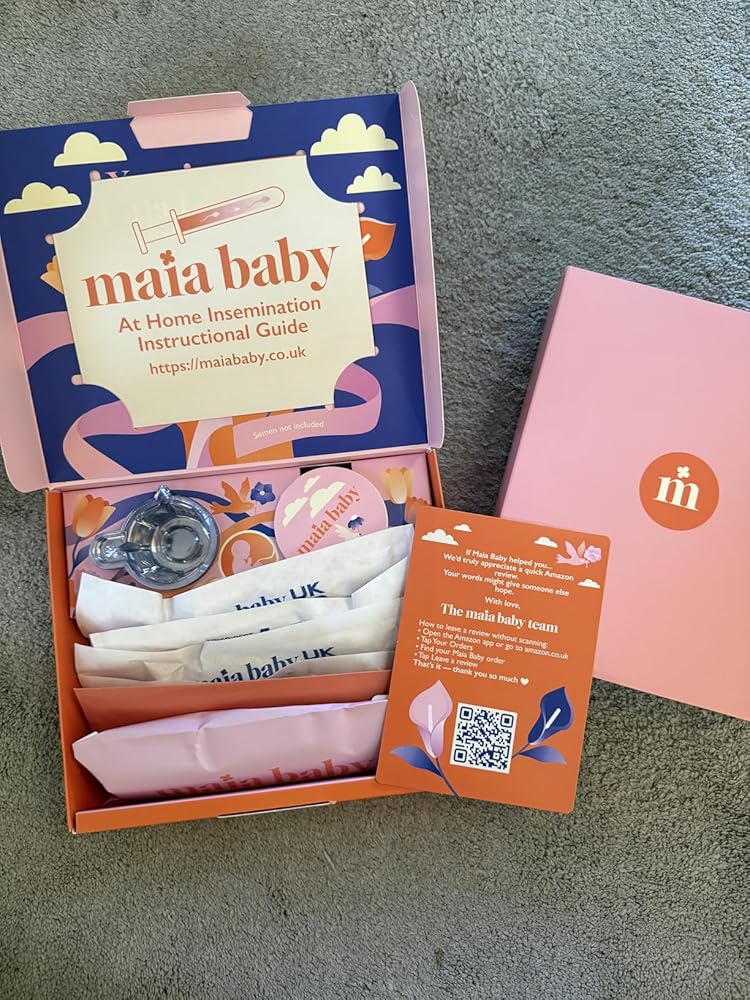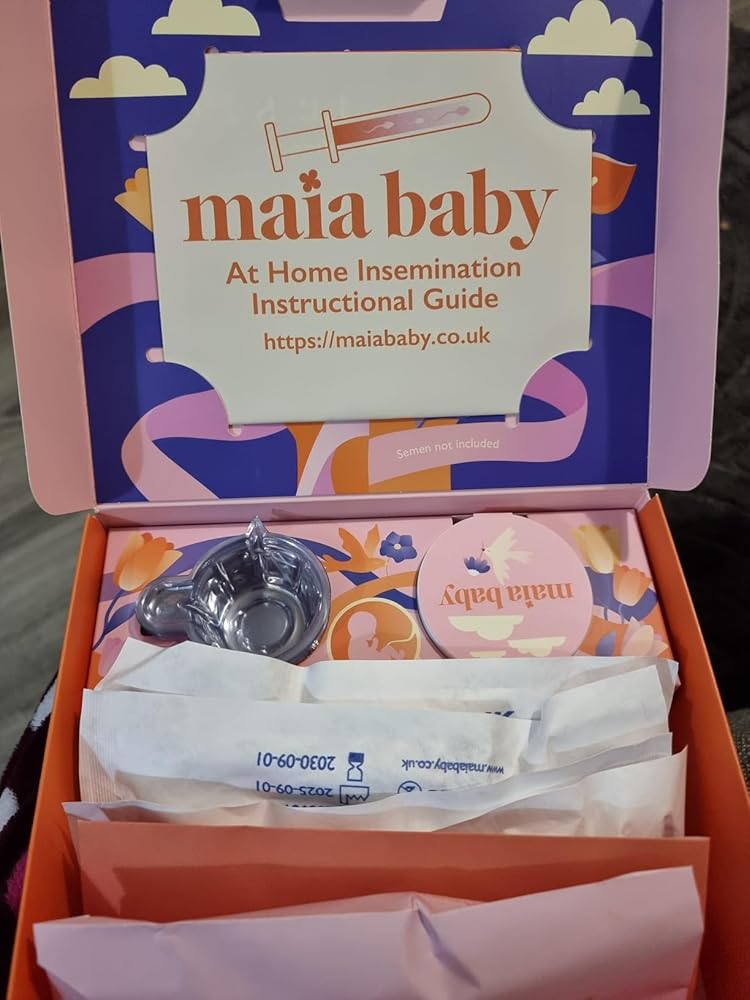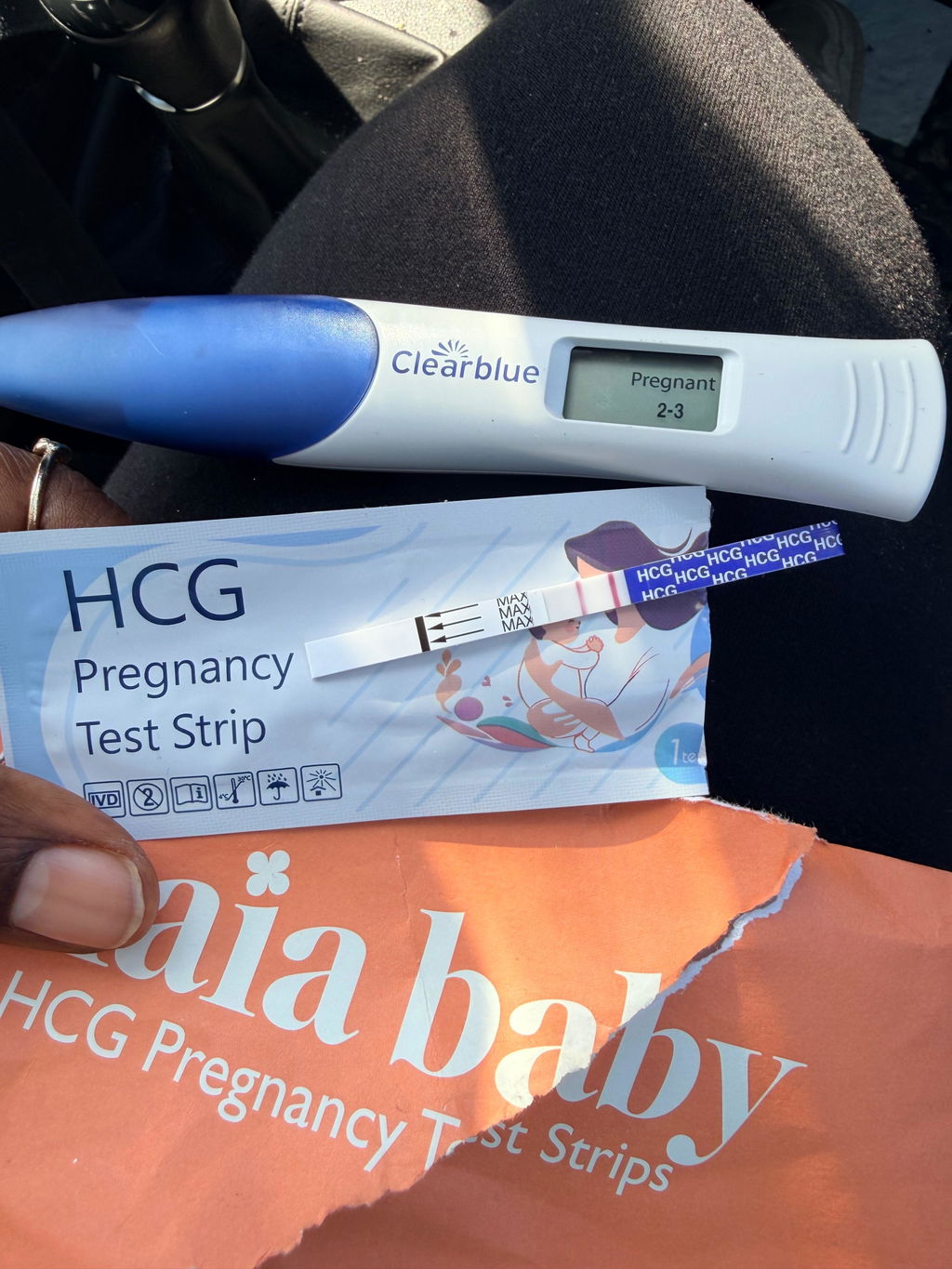


If you're timing insemination rather than just having sex, "somewhere around ovulation" isn't precise enough. A syringe or insemination kit only gets one shot at the calendar each cycle, so getting the day right matters more than it does for a couple who can simply try again the next morning. The good news: the science of exactly when to inseminate is well established, and once you know the four real signs your body gives you, you can time it with genuine confidence rather than a guess.
This guide walks through why timing matters biologically, the four real signs that tell you ovulation is close, exactly which days give you the best odds, a free calculator to turn your own cycle into a real estimate, and what to do if your cycle doesn't run like clockwork.
Understanding Your Fertile Window
Pregnancy depends on two very different clocks running at once. Once released, an egg survives for only 12 to 24 hours. Sperm, by contrast, can survive for up to 5 days inside the body when fertile cervical mucus is present to protect and nourish them. That mismatch is the whole reason timing insemination "before" ovulation beats timing it "on" ovulation day: sperm deposited a few days early can simply wait in protective cervical mucus near the cervix for the egg to arrive, while sperm deposited even a few hours after ovulation has already missed a fast-closing window.
This isn't a rule of thumb, it's been measured directly. A landmark study by Wilcox, Weinberg and Baird, published in the New England Journal of Medicine in 1995, tracked 221 healthy women trying to conceive and found that virtually every pregnancy in the study could be traced back to intercourse during a six-day window ending on the day of ovulation. The probability of conception on any single day ranged from around 10% five days before ovulation up to 33% on the day of ovulation itself, then dropped close to zero the day after. More recent UK-published data from the British Fertility Society shows a very similar real-world pattern: roughly a 26% chance of pregnancy from sex two days before ovulation, falling to just 1% the day after.
Put simply: the NHS's own guidance on fertility in the menstrual cycle confirms the same underlying idea, that pregnancy is really only possible in a short window around ovulation, not any time in the cycle. Knowing where you are in that window, rather than guessing from a calendar alone, is what the next section is about.
There's one more piece worth understanding: sperm aren't actually capable of fertilising an egg the moment they arrive. They need to undergo a real biological process called capacitation, a series of chemical changes to the sperm's outer membrane that only happens once they're inside the female reproductive tract, which takes several hours to complete. This is part of why depositing sperm a little ahead of ovulation, rather than at the exact same moment, tends to work better in practice: it gives that process time to finish before the egg is actually released.
Four Real Ways to Know You're Ovulating
Everyone's cycle is unique, and no single sign is perfect on its own. Used together, though, these four methods give you a genuinely reliable picture of when to inseminate.
1. Ovulation Predictor Kits (OPKs)
OPKs detect a real surge in luteinising hormone (LH) in your urine. That surge typically happens 12 to 36 hours before ovulation, and most people go on to ovulate within 24 to 36 hours of their first clear positive result, according to a 2017 review of ovulation-detection methods in Bioengineering & Translational Medicine.
How accurate are they, really? A 2024 study (Vanderhoff et al., Fertility and Sterility) compared five commercial OPK brands against real blood LH measurements in women undergoing monitored fertility treatment, and found accuracy of roughly 92 to 97% across the board, but sensitivity, how many real surges each brand actually catches, varied a lot by brand: from 38.46% up to 76.92%. In other words, a positive result is trustworthy, but a negative one doesn't always mean a surge hasn't started, and cheaper strip tests performed comparably to pricier digital ones.
Common mistakes worth avoiding: testing with first-morning urine (LH tends to build across the day, so early afternoon is more reliable), drinking a lot of fluid in the two hours before testing (diluted urine can hide a real surge), and counting a faint second line as a positive, when on most non-digital kits the test line has to be as dark as, or darker than, the control line to count. Worth knowing too: conditions like PCOS can cause an LH surge with no egg release at all, so OPKs work best combined with another sign, not in isolation.

Where to buy them: OPKs are widely available in the UK from pharmacies like Boots and Superdrug, or online via Amazon UK, ranging from cheap bulk test strips to pricier digital kits with a smiley-face readout. Basic strip tests and digital kits detect the same LH surge and perform similarly well once you know how to read them; digital kits simply remove the guesswork of interpreting line darkness, at a higher price per test.
2. Cervical Mucus
Cervical mucus follows a real, predictable progression across your cycle as oestrogen rises and falls. Right after your period, mucus is usually dry or absent (lowest fertility). It then turns sticky and tacky, then creamy and lotion-like as fertility rises. At its most fertile, it becomes clear, stretchy and slippery, often described as "egg white" (EWCM), which is when it's actively helping sperm travel through the cervix rather than blocking them. Once ovulation has passed and progesterone rises, mucus dries up or turns sticky again.
When you notice egg-white mucus, that's your best day to inseminate, and it's worth continuing for as long as it lasts. If you rarely notice much mucus at all, increasing your water intake or asking a GP about fertility-friendly lubricants (ordinary lubricants can impair sperm motility) is worth exploring.

To actually check, look at what's on the toilet paper when you wipe, or check your underwear across the day, then note the colour, texture and stretchiness. Checking once or twice a day, especially as you approach your predicted fertile days, gives you a real, trackable pattern over a cycle or two rather than a single confusing snapshot. A 2017 review of ovulation-detection methods found the most fertile-quality mucus correlates with the actual day of ovulation to within about a day, making it one of the more genuinely reliable signs on this list.
3. Cervical Position
This one takes practice, and it's genuinely the least reliable of the four signs used on its own, but it can be a useful extra confirmation alongside OPKs or mucus tracking. Before ovulation, the cervix sits low, feels firm (like the tip of your nose) and stays closed. As ovulation approaches, it rises higher in the vaginal canal, softens (more like your lips) and opens slightly, before dropping back down and firming up again within a day or two of ovulation.
If you want to try this method, check at the same time each day, right after washing your hands, using one or two fingers for consistency, since day-to-day comparison is what actually makes this sign useful.

4. Basal Body Temperature (BBT)
BBT works differently to the other three signs: it confirms ovulation already happened rather than predicting it in advance. Progesterone released after ovulation causes a real, measurable rise in your resting body temperature, typically 0.3°C to 0.5°C, the day after ovulation. Because that rise only shows up after the fact, BBT alone can't tell you when to inseminate this cycle, it's a pattern-building tool that gets more useful the longer you track it.
To chart it correctly: use a proper BBT thermometer (it needs finer precision than a standard one), take your temperature at the same time every morning before you get out of bed, move, or even talk, and log it consistently. A sustained rise that holds for three or more days is what confirms ovulation happened, a single higher reading on its own doesn't count.
A genuinely important limitation: a 2017 review of ovulation-detection methods found BBT charts line up with the real hormonal LH surge to within a day in only around 22% of cycles studied, and cites an earlier 2005 clinical review concluding BBT alone shouldn't be relied on by couples actively trying to time conception. That doesn't make it useless, it's still a free, simple way to build a longer-term picture of your cycle and confirm ovulation happened at all, but it's the weakest of the four signs here for deciding when to inseminate this cycle specifically. Free apps like Fertility Friend or Clue can log your readings and chart the pattern for you automatically.
The Fertile Window and Exactly When to Inseminate
Put the four signs together and a clear picture forms. Your fertile window runs for about six days: the five days before ovulation through to one day after it. Within that window, the two days before ovulation and the day of ovulation itself are consistently the highest-probability days, exactly the window Wilcox et al.'s data and the British Fertility Society's figures both point to.
If you're using a home insemination kit, a sensible plan is to inseminate once per day starting as soon as you get a clear OPK positive or notice egg-white cervical mucus, continuing through ovulation day itself. If your cycle is regular, ovulation often falls around 14 days before your next period, but that's a starting estimate, not a substitute for watching your actual signs, since cycle length varies even in people who consider their cycles "regular."

Fertile Window & Insemination Day Calculator
Use your own numbers to get a real, personalised estimate. This calculator uses your last period's start date and average cycle length to estimate your fertile window and the best days to inseminate.
Fertile Window & Insemination Day Calculator
Enter the first day of your last period and your average cycle length to get a real, personalised estimate of your fertile window and best insemination days.
This is a calendar estimate based on typical timelines, not a diagnosis or a guarantee. Your real OPK results and cervical mucus signs (covered above) are more reliable than calendar math alone, especially if your cycle varies, so use this as a starting point, not the final word. Always confirm with real tracking and a GP if you're unsure.
Should You Inseminate More Than Once?
Short answer: yes, if you're able to. Inseminating once a day across the peak fertile days, especially the two days before ovulation, gives sperm more chances to already be present when the egg is released, and there's good real-world evidence this doesn't come at a meaningful cost. Daily ejaculation doesn't meaningfully reduce sperm concentration or motility in most healthy men, and a 2025 study in Reproductive Biology and Endocrinology found more frequent ejaculation is linked to lower sperm DNA fragmentation, not higher, likely because sperm spend less time sitting in storage before use. If you're working with fresh sperm from a known donor or partner, inseminating on each of your two to three most fertile days is a reasonable, well-supported approach.
If you're working with donor or frozen sperm instead, where each vial is a limited, valuable resource, it makes more sense to concentrate on your one or two most fertile days rather than inseminating daily, timed as precisely as your OPK and mucus signs allow. Our guide on how long sperm stay in the body goes deeper on what actually happens to a sample once it's inseminated, including why some leakage afterward is completely normal.
Practically, that usually means: with fresh sperm, inseminate on the day of your first clear OPK positive or first sign of egg-white mucus, then again the following day, and again on predicted ovulation day itself if you can. With a single frozen or donor vial, hold off until your signs point most strongly to your single best day, typically once you have a clear OPK positive plus egg-white mucus together, since that combination is a stronger signal than either sign alone.
What If Your Cycle Is Irregular?
Everything above assumes a fairly predictable cycle, but plenty of people trying to conceive don't have one. If your cycles vary by more than about a week from month to month, or you have a diagnosed condition like PCOS, calendar-based estimates (including the calculator above) become much less reliable, and OPKs need a different approach too.
Here's why: PCOS in particular tends to keep baseline LH levels elevated throughout the cycle, which can trigger a false or unclear OPK positive that doesn't actually correspond to ovulation. A 2025 feasibility study on at-home ovulation prediction noted that most over-the-counter OPKs were validated on and optimised for people with regular, predictable mid-cycle LH surges, leaving a real gap for anyone whose cycle doesn't fit that pattern.
If this sounds like you, a few adjustments genuinely help. Track cervical mucus and BBT alongside OPKs rather than relying on any single sign, since a genuine mucus and temperature pattern is harder to fake than a single hormone reading. Test with OPKs over a longer stretch of your cycle rather than assuming a fixed "day 14," since ovulation may simply arrive later or less predictably. And if home tracking methods aren't giving you a clear picture after two or three cycles, it's a good reason to speak to a GP sooner rather than later, not a sign you're doing something wrong, a follicle-tracking ultrasound or blood progesterone test can confirm ovulation directly when tracking at home can't.
The Emotional Side of Getting the Timing Right
Timing insemination precisely can start to feel like a second job on top of everything else TTC already asks of you, and that pressure is real. It's worth saying plainly: missing a day, or not being totally sure you caught the right one, doesn't mean the cycle is a write-off. Your fertile window is several days long precisely because conception doesn't hinge on one single perfect moment. Our guide on stress and trying to conceive goes much deeper into the emotional side of this whole process and real, evidence-based ways to cope, so we won't repeat it all here, but give yourself the same grace you'd offer a friend going through this.
When to Seek Medical Help
If you're under 36 and have been trying for 12 months, or 36 or over and trying for 6 months, it's worth speaking to a GP, in line with real NHS guidance on fertility problems. They may suggest hormone testing, a semen analysis, or a referral to a fertility clinic. It's also worth speaking to a GP sooner, regardless of how long you've been trying, if:
- Your periods are irregular or absent
- You suspect PCOS or endometriosis
- You've had previous miscarriages
- You already know or suspect a fertility issue on either side
Real UK Resources
- NHS - Fertility in the Menstrual Cycle, the official guidance on how ovulation and the fertile window actually work
- NHS - Infertility Guidance, including real referral timelines and what a GP can offer
- Tommy's - Ovulation Calculator & Fertility Tracking, a UK pregnancy charity's own tracking tools and guidance
- HFEA - UK Fertility Regulator, the independent regulator of UK fertility clinics and treatment
- British Infertility Counselling Association, UK counselling for anyone affected by fertility problems
FAQ: Best Time to Get Pregnant
What is the best time to get pregnant?
The best time is during your fertile window, the five days before ovulation through to one day after it. The highest chance of conception is consistently the two days before ovulation and the day of ovulation itself, when sperm are already present and waiting for the egg to be released.
Can you get pregnant on ovulation day?
Yes, and real data shows it's actually one of the highest single-day probabilities in the whole cycle. But because the egg only survives 12 to 24 hours, sperm arriving even a little after ovulation has already missed it, which is why having sperm present before or right on ovulation day matters more than timing it afterward.
How many days before ovulation should you inseminate?
Most fertility guidance points to inseminating one to two days before ovulation and again on ovulation day itself, if you're able to. This gives sperm time to reach and wait in the cervical mucus for the egg, rather than trying to catch up to it.
How long can sperm survive inside the body?
Up to around five days, but only when fertile, egg-white cervical mucus is present to protect them. Outside the fertile window, the vaginal environment is much less hospitable, and sperm typically survive for under an hour there.
What if I don't know exactly when I ovulate?
Combine at least two of the four signs covered above rather than relying on a calendar alone; OPKs plus cervical mucus tracking is a strong, well-supported combination for most people. If you've tracked for two to three cycles and still don't have a clear picture, it's worth speaking to a GP.
Does insemination timing matter as much as sex timing for conception?
Yes, the same fertile-window biology applies either way, sperm needs to be present before the egg's short 12 to 24 hour lifespan runs out. If anything, timing matters slightly more for insemination, since you typically only get one attempt per day rather than multiple opportunities.
Keep Reading: More TTC Guides
Want more support with timing, sperm health, and next steps?
- How Long Do Sperm Stay in the Body?
- Does Lying Down After Sex Help Conception?
- Best Position to Get Pregnant: Do Sex Positions Actually Help Conception?
- Sperm Leakage After Insemination: Is It Normal?
- Stress and Trying to Conceive: How to Cope During Your TTC Journey
You're Doing Everything Right
Getting the timing right is one of the most genuinely useful things you can do while trying to conceive, but it's a skill you build cycle by cycle, not something you have to get perfect on the first try. Trust the signs your body is already giving you, use the calculator above as a helpful starting estimate rather than a rulebook, and remember that a several-day window exists precisely because you don't need to hit one exact moment. You've got this, and we're here for every step of it.