

Short answer: most everyday lubes do slow sperm down in lab tests, but in studies of real couples trying for a baby, the ones using lube got pregnant just as quickly as the ones who didn't. A fertility lube (one made to match semen) is the best-tested pick if you need lube at all, and I couldn't find a single study of lube and pregnancy rates in home insemination.
I'll be honest, before I started digging into this I assumed lube was simply bad news when you're trying to conceive. Most of the pages you'll find say exactly that, and most of them are selling a fertility lube.
The real picture turned out to be a lot more reassuring, and a bit more interesting.
Does Lube Kill Sperm? (What the Lab Studies Actually Found)
In the lab, yes, many ordinary lubes slow sperm down or stop them moving. That finding goes back decades and has been repeated by lots of different research groups.
In a 1998 study from Belfast, researchers mixed common lubricants with prepared sperm. Every product except baby oil significantly reduced how well the sperm swam forward, and even at a weaker mix, olive oil and saliva still slowed them down.
A 2008 study by Agarwal and colleagues found FemGlide, Replens and Astroglide all significantly reduced sperm movement, while Pre-Seed, a lube sold as fertility-friendly, did not. More recent work points the same way: a 2023 study from Nottingham found every gel it tested caused some loss of movement over an hour, with two Durex pleasure gels doing worst of the gels (though still better than saliva).
It's worth knowing how these tests work, because it changes how scary they sound:
- Sperm in a dish: lube is mixed straight into the sample, usually at around 10%.
- Fixed timings: results are read anywhere from a few minutes to a day or more later.
- No vagina, no cervix: nothing about the real route sperm take is copied.
👉 A lab dish tells you what a lube does to sperm sitting in it. It doesn't tell you whether you'll get pregnant.
If you'd rather hear it from a doctor, US fertility specialist Dr Natalie Crawford covers this from about 3:27. She says no lubricant has been shown to improve fertility, that "fertility friendly" really means fertility safe, and then runs through what lab studies found for saliva, oils and the common brands.
Does Lube Stop You Getting Pregnant? (The Real-Couple Studies)
The two studies that followed real couples trying to conceive found lube users got pregnant just as quickly as non-users. This is the part most fertility lube pages leave out.
The first, Steiner and colleagues in 2012, followed 296 women. Their conclusion was plain: "Lubricant use during procreative intercourse does not appear to reduce the probability of conceiving." The surprising bit is in the detail. KY Jelly was the most common lube in that study (44% of lube users), with Astroglide next (20%), and both have done badly in several lab studies.
The second is much bigger. McInerney and colleagues in 2018 followed 6,467 women in Denmark and North America. None of the lube types, whether ordinary water-based, "fertility friendly", oil-based or silicone, was linked to taking longer to get pregnant. In their words: "Lubricant use was not associated with reduced fecundability in the preconception cohorts of pregnancy planners studied."

Nobody knows for sure why the lab and real life disagree. One possible reason is that sperm reach the cervix very quickly after ejaculation, which the American Society for Reproductive Medicine describes as happening within seconds. As far as I can find, nobody has tested that with lube, so treat it as a theory.
It's also fair to say these were observational studies, not trials. A 2014 review by Steiner's own group said a proper randomised trial is still needed. I searched PubMed and couldn't find one.
It wasn't that lube was secretly fine all along. It was that the lab and real life were measuring two very different things.
What Makes a Fertility Lube "Sperm-Friendly"? (pH and Salt Balance)
A fertility lube is made to match semen in two ways: it is slightly alkaline (around pH 7) and its salt balance, called osmolality, is close to semen's. Most everyday lubes are neither.
Here's the clash in plain terms. The healthy vagina is acidic, around pH 3.8 to 4.5, according to a WHO, UNFPA and FHI360 advisory note. The WHO semen laboratory manual says a pH under 7.2 can be a sign something's off, so healthy semen usually sits at 7.2 or a bit above. Semen's own osmolality is roughly 250 to 380 mOsm/kg. Many everyday lubes are many times more concentrated than that.
| Product | pH | Osmolality (mOsm/kg) | Source |
|---|---|---|---|
| Semen | 7.2 or above (WHO warning line) | 250 to 380 | WHO manual 2021; WHO/UNFPA/FHI360 2012 |
| Healthy vagina | 3.8 to 4.5 | 260 to 290 | WHO/UNFPA/FHI360 2012 |
| Pre-Seed | 7.0 to 7.4 (maker's spec) | 260 to 370 (maker's spec); 295 measured | FDA K193450, 2020; Ayehunie 2018 |
| Conceive Plus | 7.0 to 7.6 (maker's spec) | 290 to 400 (maker's spec) | FDA K131355, 2013 |
| K-Y Jelly | 4.55 | 2,007 to 2,510 | WHO/UNFPA/FHI360 2012; Dezzutti 2012 |
| Replens | 2.9 to 2.98 | 1,491 to 2,143 | Dezzutti 2012; WHO/UNFPA/FHI360 2012; Adriaens 2008 |
| Astroglide | 4.44 (liquid) | 4,500 to 8,064 | WHO/UNFPA/FHI360 2012; Ayehunie 2018 |
Sources: FDA K193450, FDA K131355, Dezzutti 2012, Ayehunie 2018, Adriaens 2008, WHO documents above. Labs measure the same brand differently and formulas change, so treat these as dated snapshots, checked November 2026.
So K-Y Jelly measured roughly five to ten times the osmolality of semen, and Astroglide well over ten times. Pre-Seed and Conceive Plus are both built to sit inside semen's range.
Two things surprised me here:
- Glycerin-free and paraben-free aren't the test. Conceive Plus contains both glycerol and methylparaben, and it still passed the US sperm compatibility tests. The whole recipe, including how concentrated it is, seems to matter more than any one ingredient.
- "Gentle" bases can still score badly. K-Y Jelly is built on the same thickener as Pre-Seed (hydroxyethylcellulose), and it does poorly in the lab. The rest of the recipe matters.
Check Your Lube (Interactive)
Pick your lube, or what's in your kitchen cupboard, and see how it does on five simple checks. It isn't a ranking, just the published facts laid side by side.
Which Lubes and Kitchen-Cupboard Swaps Should You Avoid?
Avoid anything with spermicide, go easy on warming or tingling gels, and don't rely on saliva or oils as a "natural" swap. Here's what the studies say about each.
- Spermicide (nonoxynol-9): it's designed to kill sperm, and it does. In one 1996 study, a nonoxynol-9 spermicide was the comparison for sperm that can't move at all, and two everyday lubes, Replens and Astroglide, left the sperm just as still and lifeless after an hour. Check the label for it, especially on condom-style lubes.
- Warming and tingling gels: these tend to be very concentrated. K-Y Warming Jelly was the most concentrated lube measured in one 2018 study, at 8,600 mOsm/kg.
- Saliva: at least three separate lab studies, going back to Tulandi in 1982, found it reduced sperm movement. It's the default for a lot of couples, and it isn't sperm-neutral.
- Olive oil: slowed sperm in the 1998 Belfast study, even at a weak mix.
- Baby oil: mixed results. It was fine in 1998, but a 2025 study found it reduced forward movement at 30 minutes.
- Coconut oil: I could only find one lab study on human sperm, a small one from India in 1988 using samples from six men, and it found coconut oil had no effect on the sperm. One old, tiny study isn't enough to call it safe, and like all oils it damages latex condoms.
- Petroleum jelly (Vaseline): slowed sperm at 60 minutes in the 2025 study, and in a US study of 141 women, using it vaginally was linked to a higher chance of bacterial vaginosis.

One more practical point. Oils, baby oil and petroleum jelly all damage latex condoms, according to the WHO advisory note. That matters less while you're trying, but it's worth knowing.
What Does "Fertility Friendly" Actually Mean in the UK?
In the US, sperm-compatible lube is its own FDA category with lab tests behind it. The UK has no special category for it, so the words "fertility friendly" on their own don't tell you what testing a lube has had.
In the US, these lubes are "cleared" (not "approved") under a category the FDA describes as compatible "with sperm, oocytes, and embryos and can be used by couples trying to conceive". To get there, Pre-Seed had to show that sperm kept at least 80% of their normal movement 24 hours after exposure, according to its FDA clearance letter.
The important bit: that clearance rests on lab and safety tests, not on pregnancy rates. I couldn't find any study showing a fertility lube helps you get pregnant. They're designed not to get in the way, which is a different thing.
In Great Britain, the MHRA's own guidance lists "lubricants for body massages or sexual intercourse with no medical claims" as products not normally considered medical devices. A 2019 study from Dundee surveyed 32 fertility healthcare professionals in Scotland and found their knowledge of which lubes harm sperm was "generally poor", and that the one prescribed lube in the study cut sperm movement roughly in half within 10 minutes.
👉 If a UK lube says "fertility friendly", look for the actual numbers (pH and osmolality) or US clearance, not just the words.
Lube and Home Insemination (The Bit Nobody Talks About)
I couldn't find any study of lube and pregnancy rates in home insemination, so the safest approach is to keep lube out of the sample completely and only use a sperm-compatible one if you need it for comfort.
This is the part I found strangest, because it's the bit that matters most for anyone doing insemination at home. The 2012 real-couple study was about sex, and its authors were clear it shouldn't be stretched further: "These results should not be generalized to lubricant use during vaginal sonography, pelvic examination, or intrauterine inseminations."
So with insemination, the reassuring real-couple results don't automatically apply. Here's what the evidence does support:
- Keep the collection pot lube-free. The WHO semen laboratory manual says: "Lubricants should be avoided, since they may contaminate the ejaculate and change its properties. If absolutely necessary, validated non-spermatotoxic lubricants must be used."
- If he needs lube to produce a sample, one small trial of 22 men found using Pre-Seed during collection made no difference to sperm quality, and 73% preferred it. Small study, one product, but reassuring.
- The applicator doesn't need lube. I couldn't find any guideline or study that says an applicator should be lubricated. If insertion is uncomfortable, a small amount of a sperm-compatible lube on the outside is the cautious choice. The US FDA category actually covers using these lubes to help devices go in during fertility treatment.
- Same advice for donor sperm and same-sex couples. The real-couple studies were about couples having sex, and I couldn't find any study of lube with frozen donor sperm, so the same keep-it-out-of-the-sample rule is the sensible default.
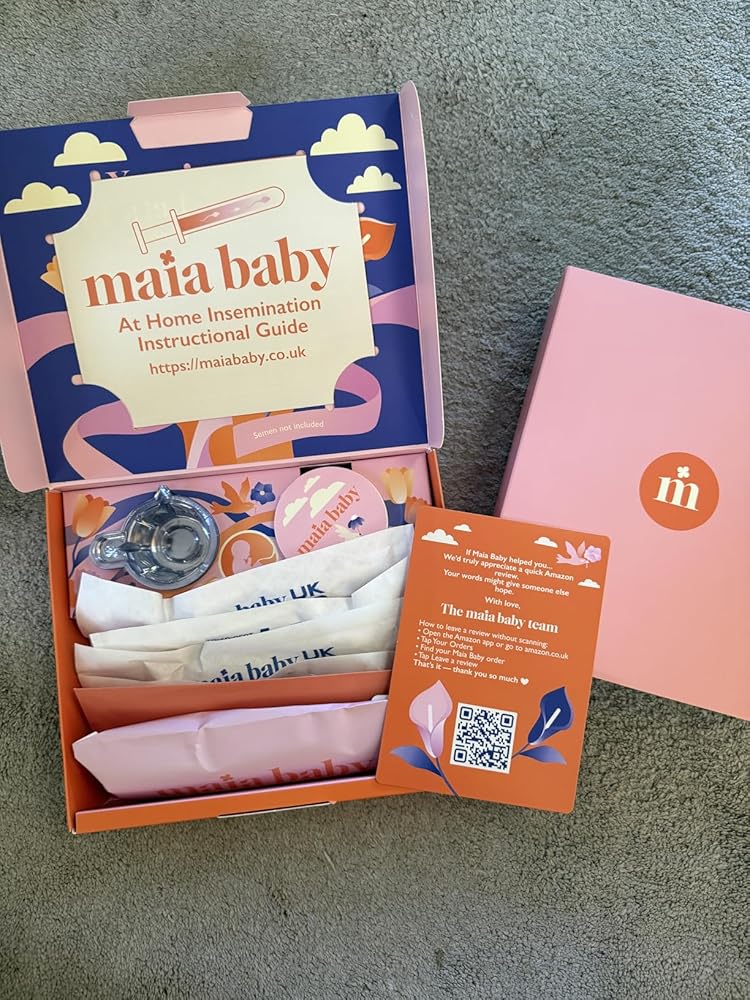
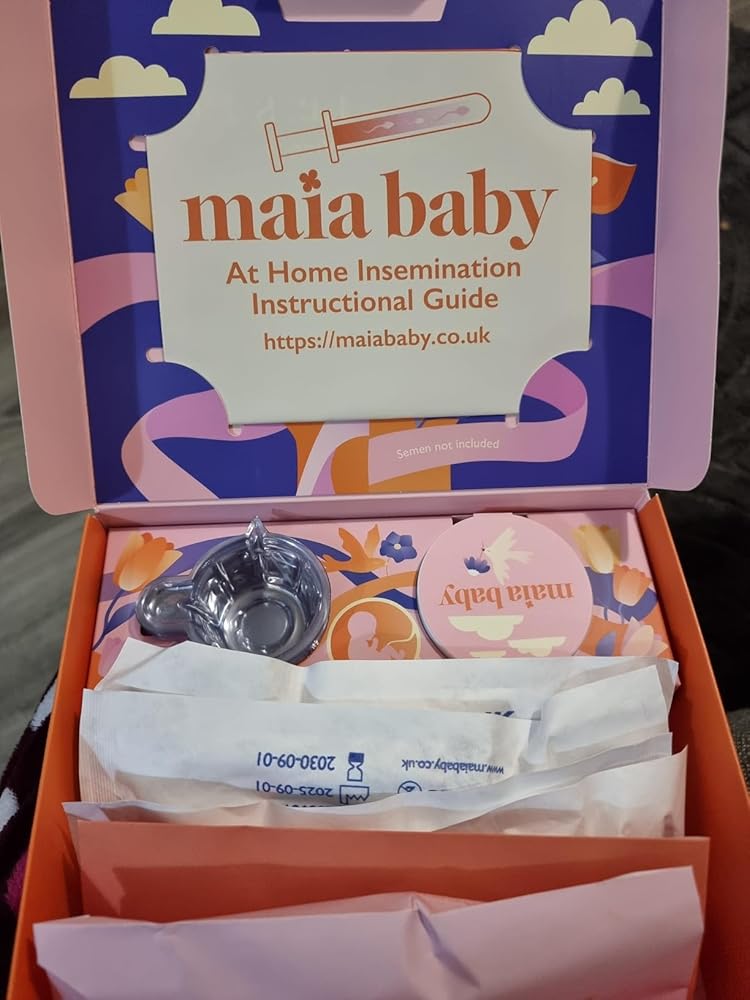
We did our own inseminations at home with a makeshift kit, and I'd have liked a page like this back then. If you're working out the rest of the process, our home insemination guide walks through every step.
Have We Wasted Cycles Using Normal Lube?
Almost certainly not. This was the worry I saw most on Mumsnet: couples suddenly realising the everyday lube they'd been using, like Durex, might be a problem, and wondering if they'd wasted a cycle.
Remember that most of the lube users in the 2012 study were on KY Jelly or Astroglide, and they conceived at a similar rate to non-users. The 6,467-woman study found the same for ordinary water-based lube.
What I'd take from it:
- Going forward, if you need lube, switching to one that matches semen costs little and removes a question mark.
- Looking back, lube is very unlikely to be the reason it hasn't happened yet.
- If it's been a while, the NICE fertility guideline actually tells clinicians to ask about "over-the-counter products (for example, non-steroidal anti-inflammatory drugs or vaginal lubricants)". So mention it to your GP; it's a normal question, not an embarrassing one.
Frequently Asked Questions About Fertility Lube
Does saliva kill sperm?
Saliva won't stop you getting pregnant on its own, but it does slow sperm down in lab tests. Lab studies from 1982 to 2023 found saliva reduced sperm movement, and in one 2023 study it did worse than the pleasure gels it was compared with. Neither of the real-couple studies looked at saliva. If you're using lube to help while trying, a sperm-compatible lube is the better-evidenced choice than saliva.
Does Durex lube kill sperm?
It depends which Durex product, and the studies disagree. A 2021 Spanish study found the Durex gel it tested had no harmful effect, while a 2023 Nottingham study and a 2025 Thai study found Durex gels reduced sperm movement. Durex makes many different formulas, so one result doesn't cover the whole range. None of these were real-couple studies, and in real couples ordinary water-based lube made no difference to how quickly they conceived.
Is K-Y Jelly sperm friendly?
Not in lab terms. K-Y Jelly has measured at roughly five to ten times the osmolality of semen and is acidic, and it reduced sperm movement or damaged sperm DNA quality in several lab studies, including Agarwal 2008. That said, it was the most common lube in the 2012 real-couple study, and its users conceived at a similar rate. If you're choosing lube specifically for trying to conceive, a semen-matched one is the more cautious choice.
Pre-Seed vs Conceive Plus: which is better?
I couldn't find any study comparing them on pregnancy rates, so neither can claim to be better at helping you conceive. Both are cleared in the US as sperm-compatible, with pH around 7 and osmolality close to semen. In a 2014 lab comparison of nine lubes by Mowat and colleagues, Pre-Seed had the least negative effect on sperm, with Conceive Plus a close second. Choose on comfort, price and what you can easily buy.
Can I use coconut oil as a fertility lube?
I could only find one lab study of coconut oil and human sperm, a small one from India in 1988 using samples from six men, and it found coconut oil had no effect on the sperm. Everything else I found was in animals. One old study isn't enough to call it sperm-safe. Other oils have mixed results: olive oil slowed sperm in a 1998 study, and baby oil gave different results in different studies. Oils also damage latex condoms. If you want something that's been properly tested with sperm, a fertility lube is the safer bet.
What can I use instead of lube when trying to conceive?
The first option is often more time: dryness is common when sex is timed around ovulation, and the 2018 study's authors noted occasional dryness is reported by most couples trying to conceive. Beyond that, a sperm-compatible lube is the best-tested option. Egg white did well in one 2022 lab study, but none of the studies I read looked at whether it's safe to put in the vagina, so I wouldn't recommend it. Saliva and oils both have mixed or negative lab results.
Does fertility lube help you get pregnant?
There's no evidence that it does. In the 6,467-woman study, women using "fertility friendly" lube conceived at essentially the same rate as women using no lube at all. These lubes are designed and tested not to harm sperm, which is useful if you need lube, but that isn't the same as boosting your chances. Be wary of any brand claiming its lube increases pregnancy rates.
Will lube stop you getting pregnant?
Ordinary lube is not a contraceptive, and the real-couple studies found it didn't reduce the chance of conceiving. The exception is anything containing spermicide, such as nonoxynol-9, which is designed to stop sperm and should be avoided when you're trying. If you don't want to get pregnant, lube on its own gives you no protection at all.
Keep Reading: Helpful TTC Guides
If this answered your lube question, these go deeper on the rest of the process:
- Home insemination: a step-by-step guide
- How long do sperm stay in the body?
- Sperm leakage after insemination
- Egg white discharge and your fertile window
- Best time to get pregnant
Looking back, the thing that stuck with me most from all this reading was one line from the 2018 researchers: occasional dryness "is reported by most couples trying to conceive, perhaps because of higher intercourse frequency, increased stress, and the lack of spontaneity often associated with timed intercourse."
That's the real story, really. Trying for a baby turns something private and spontaneous into something with a calendar attached, and it's normal for that to feel strange. Needing lube isn't a sign anything is wrong.
Go easy on each other. It's emotional, it's a bit unromantic at times, and it's something you go through together.