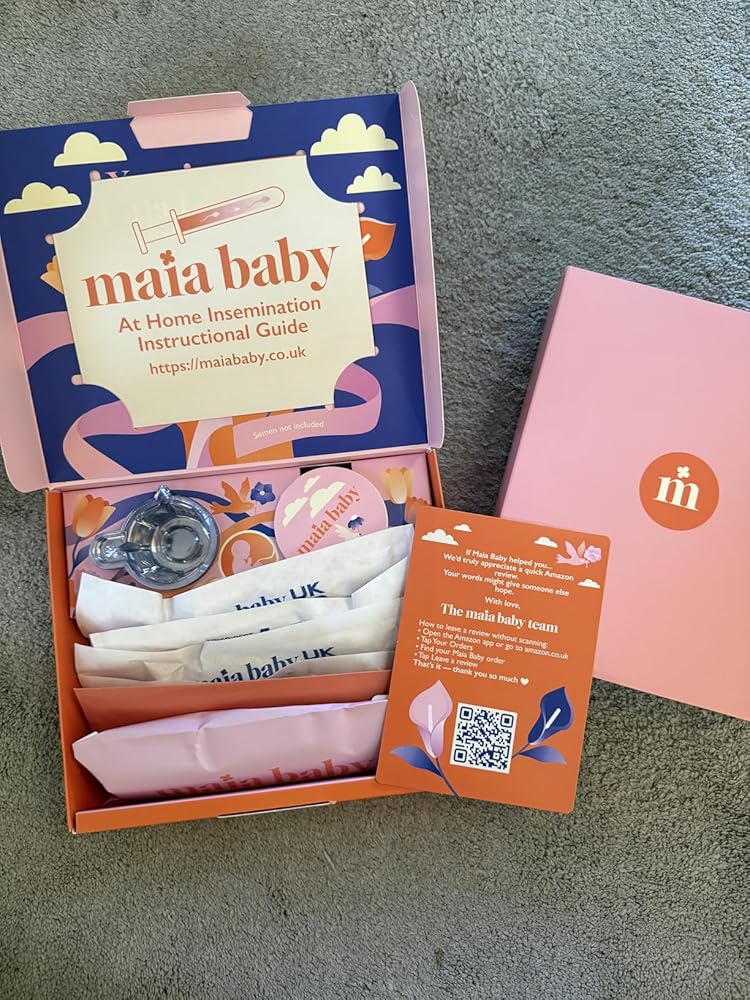


The history of artificial insemination starts with a syringe, not a turkey baster. The earliest documented human case, reported to the Royal Society in 1799, came from the London surgeon John Hunter, who advised a husband to collect his semen in a warmed syringe and inject it into his wife's vagina, and she became pregnant. The earliest dated success in a mammal came in 1780, when the Italian scientist Lazzaro Spallanzani inseminated a spaniel.
In between and since, there's a church commission, a House of Lords motion calling it adultery, a 1978 newspaper scandal and a London women's group passing on where to buy an "inseminator". To be honest, a lot of what gets repeated online about this history doesn't survive contact with the original documents, so where a story rests on a single later account, I'll say so.
When Was the First Artificial Insemination? (The Short Answer, Then the Timeline)
The first documented human artificial insemination is John Hunter's case, published in 1799, and the earliest dated insemination of a mammal is Spallanzani's dog in 1780. Hunter's case has no date in the record itself, which is why you'll see it placed anywhere from the 1770s to 1790.
The paper that reports it, by Everard Home in the Philosophical Transactions of the Royal Society, was "Read March 7, 1799". Home claims Spallanzani's work came "several years after" Hunter's success, which would put Hunter before 1780. That is Home's own claim, though, made after Hunter's death. The 2015 review by Ombelet and Van Robays also says "the 1770s", but cites no record for that date.
Here is the whole story on one page.

Tap or click the image to open it full size.
👉 Roughly 250 years separate Spallanzani's spaniel in 1780 from today, and across the records from that time, the tool keeps turning out to be a syringe.


Explore the Timeline
Tap a year, or use the arrows, to step through the verified record, from the first documented cases to the end of donor anonymity at UK clinics.
What Did John Hunter Actually Do? (And What the 1799 Paper Doesn't Say)
The husband had a malformed urethra, so "the semen always passed out at the perineum".
Hunter "advised that the husband should be prepared with a syringe fitted for the purpose, previously warmed". Then Everard Home gives the outcome in one line: "This experiment was actually made, and the wife proved with child."
That's the whole of it. The retellings add a lot:
- No birth is recorded. The paper records a pregnancy, not a baby.
- It wasn't intrauterine. The semen was "injected into the vagina", so "the first IUI" is wrong.
- No name, date or job. A search of the paper's text for "draper", "merchant" and "linen" finds none of them, so the popular "linen draper" husband comes from a later telling.
Who Invented Artificial Insemination? (Spallanzani, a Spaniel and Some Frogs in Trousers)
No one person can really be said to have invented artificial insemination, but Lazzaro Spallanzani has the strongest documented claim for animals (his spaniel is the earliest dated mammal case), and John Hunter for humans.
Spallanzani's own account, in the 1784 English translation of his Dissertations, is surprisingly vivid. He injected "nineteen grains of seed" from a young dog "into the matrix, by means of a small syringe", warmed to body heat. Then, "sixty-two days after the injection", the spaniel "brought forth three lively whelps".
You'll often see this dated 1784. That's the year of the English translation. Charles Bonnet's letter congratulating him is dated 13 January 1781, and Wikler and Wikler (1991) date the success to 1780.
Then there are the frogs. Spallanzani put male frogs in "breeches of waxed taffety", which are exactly the tiny waxed trousers they sound like. It's often credited to him as his invention, but he openly credits the idea to Réaumur and Nollet, and quotes Nollet's letter describing it.
👉 So Spallanzani didn't invent the frog trousers. He just took them seriously.
What About the Older Stories? (Castile, Arab Horses and the Talmud)
The older stories, from medieval Castile, Arab horse breeders and the Talmud, are legends or misreadings rather than documented cases. They turn up on a lot of "artificial insemination facts" lists:
- Henry IV of Castile (1400s). Even the medical historians Ombelet and Van Robays file this one under "unofficial history".
- Arab horse breeders (often dated 1322). The research for this article checked the Ombelet review, the Wikler paper, a history of 1950s British practice and PubMed title searches, and could not trace it to a primary or peer-reviewed source. Treat it as legend.
- The Talmud. The passage usually cited, Chagigah 15a, is a legal hypothetical about a virgin found pregnant who "may have conceived in a bath". It describes no deliberate insemination.
What Happened to Artificial Insemination in the 1800s? (Sims, Pancoast and a Question of Consent)
In the 1800s, artificial insemination moved into the doctor's surgery: J. Marion Sims recorded 55 uterine injections that produced one pregnancy, and a later, disputed account describes the first donor insemination.
Sims was a New York surgeon. His Clinical Notes on Uterine Surgery (1866) describes drawing semen up from the vagina after intercourse and injecting it into the uterus with a glass syringe warmed to 98°F. He made "fifty-five uterine injections" on "half a dozen different patients" over "two years". Conception happened once, on the tenth attempt in one patient, and ended in miscarriage in the fourth month.
He was confident about his place in history. Sims wrote: "I presume it is the first and only authentic case in which artificial fertilization has been successful in the human species". The slight irony is that Home had published Hunter's case 67 years earlier.
The Pancoast account, and why consent matters
The first reported donor insemination rests on one letter, and it's a disturbing one. In 1909 Addison Davis Hard published a letter in Medical World, presented as an eyewitness account of events in Philadelphia. According to that letter, as quoted by Wikler and Wikler, Professor William Pancoast was treating a couple where the husband's semen had no sperm. The wife was put under chloroform and inseminated with a medical student's semen without her knowledge, and a son was reportedly born.
Three caveats sit right next to that story:
- The usual date, 1884, isn't in the excerpt the Wiklers quote, which gives no year. It comes from later accounts.
- It was written years after the event, by one person.
- It was challenged. The Wiklers note that "the eyewitness account was later disputed". A 1965 paper on Pancoast and Hard by Gregoire and Mayer has no abstract online, and its full text could not be accessed for this article.
So it's a claim, not a settled fact. It's here because even as a disputed story, it shows why the later rules exist: the woman's consent, a record of who the donor was, and someone independent overseeing it.
How Did Farm Animals and Frozen Sperm Change Artificial Insemination?
Livestock breeding turned artificial insemination into a routine, large-scale technique in the early 1900s, and freezing research from 1949 to 1953 made sperm banking possible.
According to Ombelet and Van Robays, Ilya Ivanov began developing practical methods in Russia in 1899, and published on their use for "zootechnical purposes in Russia" in 1922. The same review says that, as of 2015, more than 90% of dairy cows in the Netherlands, Denmark and the UK were artificially inseminated.
The human side got its big step from freezing:
- 1949: Polge, Smith and Parkes reported in Nature that glycerol improved the survival of frozen human sperm.
- 1953: Bunge and Sherman published "Fertilizing capacity of frozen human spermatozoa" in Nature. With 10% glycerol and dry ice, survival averaged "67 per cent" in sperm from five young, healthy men.
If you want to know how that works now, I've written about sperm freezing in the UK separately.
How Did Artificial Insemination Develop in Britain? (From London Clinics to the House of Lords)
In Britain, doctors were offering donor insemination from the 1940s; a church commission condemned it in 1948, the House of Lords debated it in 1958, a government committee concluded in 1960 that it was undesirable, and in 1968 the Minister for Health decided it should be available on the NHS.
In January 1945, Mary Barton, Kenneth Walker and Bertold Wiesner published a paper titled "Artificial Insemination" in the BMJ. The historian Gayle Davis, working from the government committee's own files, lists Barton as practising in London since 1940, alongside doctors in Exeter and Manchester (Davis, 2017).
In 1945 the Archbishop of Canterbury also set up a commission. According to the Warnock Report, when it reported in 1948 the Archbishop himself was "highly critical of the practice of AID, though not of AIH" (donor versus husband insemination), and recommended making it a criminal offence. No action was taken.
On 26 February 1958, Lord Blackford asked the House of Lords to agree that donor insemination of a married woman "is tantamount to adultery, that it should be sufficient ground for divorce, and that all children so conceived are illegitimate". He said Barton would "not admit to a higher figure than 5,000" donor-conceived children in the UK, and that "She herself has produced about 900". Those are self-reported figures relayed second-hand in a debate, so treat them as colour rather than statistics.
In the same debate, Lord Denning pointed out that "The Court of Session in Scotland ... has ruled that it is not adultery", in the case of Maclennan v Maclennan. The motion was withdrawn.
The government's Feversham Committee was appointed in 1958 and reported in 1960. The Warnock Report sums it up as having "concluded that AID was an undesirable practice, strongly to be discouraged". It didn't stop anything. The Warnock Report records that in 1968 the Minister for Health decided it "should be available within the NHS if recommended on medical grounds", and that in 1982 the Royal College of Obstetricians and Gynaecologists knew of over 1,000 pregnancies and at least 780 live births after donor insemination, "undoubtedly an under-estimate".
👉 The official line said discourage it. The clinics said otherwise.
Where Did the "Turkey Baster" Come From? (And What People Actually Used)
"Turkey baster" became shorthand for self-insemination in the 1970s, as lesbian and single women began inseminating with private donors, but in the records and research the tool was more commonly a syringe. So if you searched "turkey baster pregnancy" wondering whether that's genuinely how it's done, the history says: mostly not.
On 5 January 1978 the London Evening News ran an exposé headlined "Dr Strangelove: The Belgravia man who helps lesbians have babies", about Dr David Sopher. A reporter had posed as a young lesbian to get the story. The paper said he was "responsible for the birth of 10 babies to lesbian couples", at £12 per insemination, with the women carrying out the insemination themselves. Jennings (2017) calls the paper's claims misleading and records that he provided donor insemination to six lesbian couples during the 1970s. Questions were raised in Parliament, and according to Jennings the scandal led more women to seek clinic donor insemination, and more to arrange it privately with donors.
Around the same time, a London group met in a pub to discuss an Evening News article on artificial insemination. In their 1980 pamphlet Self Insemination, quoted by Wikler and Wikler, one member was told "you could buy an inseminator from John Bell and Croydon in Wigmore Street" for seven pounds. Semen came from male friends, and "Several pregnancies resulted". In 1986 Lisa Saffron's guide Getting pregnant our own way followed, published by London's Woman's Health Information Centre; the Wellcome archive notes it "proved controversial, with the group's funders threatening to cut funding if they continued to 'promote homosexuality'".
So did anyone use an actual turkey baster? Some did. According to Wellcome Collection's piece on turkey-baster myths, a 1979 US book quoted a woman who said she had used one. In the same piece, the sociologist Kathryn Almack puts it plainly: "from my research, more commonly, women using known donor sperm use a small syringe".

Tap or click the image to open it full size.
It wasn't really about the baster. It was about who got to decide how, and with whom, they had a baby.
How Did the Law Catch Up? (Warnock, the HFEA and the End of Anonymity)
UK law caught up in three steps: the Warnock Report in 1984, the Human Fertilisation and Embryology Act 1990, which created the HFEA, and the 2005 rule letting donor-conceived people identify their donor at 18.
The Warnock inquiry was set up in July 1982 and reported in July 1984. Its key line on donor insemination, from paragraph 4.16 of the Warnock Report: "we recommend that the provision of AID services without a licence for the purpose should be an offence."
That became law in the Human Fertilisation and Embryology Act 1990, which received Royal Assent on 1 November 1990. The HFEA was set up in 1991, and in its own words it was the world's first statutory regulator of assisted reproduction treatments and human embryo research.
Two later changes matter most if you're using a donor now:
- 2005, the end of anonymity for new donors. The 2004 disclosure regulations cover identifying information a donor provides after 31 March 2005, and the HFEA says donors who donated on or after 1 April 2005 can be identified by people conceived from their donation once they turn 18. That applies to UK licensed clinics, which could use earlier anonymous donations until 31 March 2006, and I cover it in my guide to using a sperm donor in the UK.
- 2008, two-mum families. The Human Fertilisation and Embryology Act 2008 changed the rules on legal parenthood, including for female partners.
When Should You See a GP?
If you've been trying to conceive for a year without success, the NHS says it's a good idea to see a GP, and women aged 36 and over, or anyone who already knows they may have fertility problems, should go sooner. That one-year guidance on the NHS infertility page is written about people trying through regular unprotected sex, so if you're inseminating with donor sperm, ask your GP or clinic how it applies to you.
- After clinic IUI: the NHS IUI page says to contact your GP or a midwife to start antenatal care once you get a positive pregnancy test.
- Using donor sperm at home: the HFEA says you "may want to find a counsellor privately", and names BICA and BACP.
What Does This History Mean for Home Insemination Today?
The HFEA says using an unregulated donor "is not a criminal offence, and you are not breaking the law", but that donors or others involved in making the sperm available "may be committing a serious crime". It strongly advises a licensed clinic, because that's where the legal protections this history slowly built up actually apply. Its page on home insemination with donor sperm puts it this way:
"We strongly advise having treatment at an HFEA licensed clinic, where there are laws and guidance to protect and support all patients and donors."
For a modern chapter of this story, read how Aimee and Nicola, a married couple, conceived at home with a known donor on their third try: Two Mums, One Donor and a Positive on the Third Try.
Its concerns are the same ones this history kept circling back to: who counts as a legal parent, and whether the donor has been screened. It warns that apps, websites and social media sites helping exploitative or serial donors expose people to "serious medical, legal, and emotional risks". If you're weighing a clinic against home, I've broken down insemination costs in the UK.
The tools barely changed in 250 years. What changed was who was allowed to use them, and whether anyone was looking out for them when they did.
Artificial Insemination Facts: Frequently Asked Questions
When did artificial insemination first start?
The earliest dated success in a mammal was Lazzaro Spallanzani's: he inseminated a spaniel in 1780, and she had three puppies 62 days later. The first documented human case was John Hunter's, reported by Everard Home to the Royal Society in 1799, although the paper gives no date for it.
Who is the father of artificial insemination?
"Father of artificial insemination" is an informal label, not an official title, and no one person can really be said to have invented it.
What are the four types of artificial insemination?
The sources checked for this article don't give an official list of four: none of the NHS, HFEA or research sources checked sets out a formal "four types" classification. The routes named and compared in peer-reviewed trials and Cochrane reviews are intracervical (ICI), intrauterine (IUI) and intratubal insemination (ITI), for example fallopian tube sperm perfusion (Hurd et al., 1993; Kop et al., 2018; Cantineau et al., 2013). Placing sperm in the vagina (intravaginal insemination), as in Hunter's 1799 case, is another route. The NHS describes IUI as sperm "put directly into your womb (uterus) when you're ovulating". For the jargon, see fertility terms explained.
The full timeline, with sources (16 entries)
| Year | Where | Who | What happened | Why it mattered | Source |
|---|---|---|---|---|---|
| Undated (Home claims before 1780); reported 1799 | Britain. The record gives no place; later accounts say London | John Hunter, surgeon; reported by Everard Home | A husband whose semen escaped through an opening in the urethra was told to collect it in a warmed syringe and inject it into his wife's vagina. "The wife proved with child." | Earliest documented human artificial insemination, using the husband's own semen | Home, Philosophical Transactions 1799 (primary) |
| 1780 | Italy | Lazzaro Spallanzani | Injected dog semen into a confined spaniel with a small warmed syringe; three puppies were born 62 days later | Earliest dated successful artificial insemination of a mammal | Spallanzani 1784 English translation (primary); Wikler and Wikler 1991 |
| 1866 | Published in London; Sims was a New York surgeon | J. Marion Sims | Reported 55 uterine injections in 6 patients over 2 years; one conception, which miscarried at four months | Early clinical record of placing semen inside the uterus | Sims, Clinical Notes on Uterine Surgery 1866 (primary) |
| 1884 (date from later accounts); reported 1909 | Philadelphia, US | Professor William Pancoast; account by Addison Davis Hard | A woman under chloroform was inseminated with a medical student's semen without her knowledge; a son was reportedly born | First reported donor insemination, and an early consent scandal. Rests on one letter written years later, and the account was disputed | Wikler and Wikler 1991; Gregoire and Mayer 1965 (secondary) |
| 1899 to 1922 | Russia | Ilya Ivanov | Developed practical insemination methods for farm animals; published in 1922 | Began the livestock scale-up whose methods later shaped human practice | Ombelet and Van Robays 2015 (secondary); Ivanoff 1922 |
| 1945 | London | Mary Barton, Kenneth Walker, Bertold Wiesner | Published "Artificial Insemination" in the BMJ (13 January). The Archbishop of Canterbury set up a commission the same year | UK donor insemination entered the medical and church record | BMJ 1945; Hansard 1958 |
| 1948 | England | Archbishop of Canterbury's commission | Report "Artificial Human Insemination" recommended making donor insemination a criminal offence; no action was taken | First formal public comment on donor insemination in the UK, according to the Warnock Report | Warnock Report 1984 |
| 1949 to 1953 | UK journal (Nature); US | Polge, Smith and Parkes; then Bunge and Sherman | Glycerol improved survival of frozen human sperm (1949); Bunge and Sherman published on the fertilising capacity of frozen human sperm (1953) | Made sperm banking possible | Nature 1949; Nature 1953 |
| 1958 | Edinburgh and Westminster | Court of Session (Maclennan v Maclennan); House of Lords | Scottish court ruled donor insemination was not adultery. A Lords motion calling it "tantamount to adultery" was withdrawn | One Scottish ruling on the adultery question; the issue also reached the House of Lords | Hansard, House of Lords 1958 (primary) |
| 1960 | UK | Feversham Committee (Cmnd 1105) | Concluded, in the Warnock Report's summary, that donor insemination was "an undesirable practice, strongly to be discouraged" | Official disapproval, while the practice kept growing | Warnock Report 1984; Davis 2017 |
| 1968 | UK | Minister for Health | Decided husband and donor insemination should be available on the NHS if recommended on medical grounds | NHS provision approved in principle | Warnock Report 1984 |
| 1978 | London | Evening News; Dr David Sopher; Sappho magazine | Exposé (5 January) of lesbian couples conceiving by donor insemination; questions raised in Parliament | The publicity spread the idea: more women sought clinic donor insemination, and more arranged it privately with donors | Jennings 2017; Wikler and Wikler 1991 |
| 1980 to 1986 | London | Feminist Self-Insemination Group; Lisa Saffron | Pamphlet Self Insemination (1980); guide Getting pregnant our own way (1986) | The UK self-insemination movement documented its own methods | Wikler and Wikler 1991; Wellcome Collection catalogue |
| 1984 | UK | Warnock Committee (Cmnd 9314) | Recommended licensing, and that providing donor insemination without a licence should be an offence | Blueprint for UK fertility law | Warnock Report 1984 (primary) |
| 1990 to 1991 | UK | Parliament; HFEA | HFE Act 1990 (Royal Assent 1 November 1990) created the HFEA, which was set up in 1991 | HFEA describes itself as the world's first statutory regulator of its kind | legislation.gov.uk; HFEA (primary) |
| 2005 and 2008 | UK | Parliament; HFEA | Donors who donated on or after 1 April 2005 can be identified to donor-conceived people at 18. HFE Act 2008 (13 November 2008) changed legal parenthood rules, including for female partners | Ended anonymous donation for new donors at UK clinics and recognised two-mum families in law | legislation.gov.uk; HFEA (primary) |
Timeline compiled September 2026 from primary records (Philosophical Transactions 1799, Spallanzani 1784, Sims 1866, Hansard 1958, the Warnock Report 1984, legislation.gov.uk, HFEA) and named historians where no primary record was available.
Keep Reading: Helpful TTC Guides
If this history has you thinking about your own options, these guides pick up where it leaves off:
- Using a sperm donor in the UK
- How much insemination costs in the UK
- Sperm freezing in the UK
- Fertility terms explained
- Two mums, third try: a real story