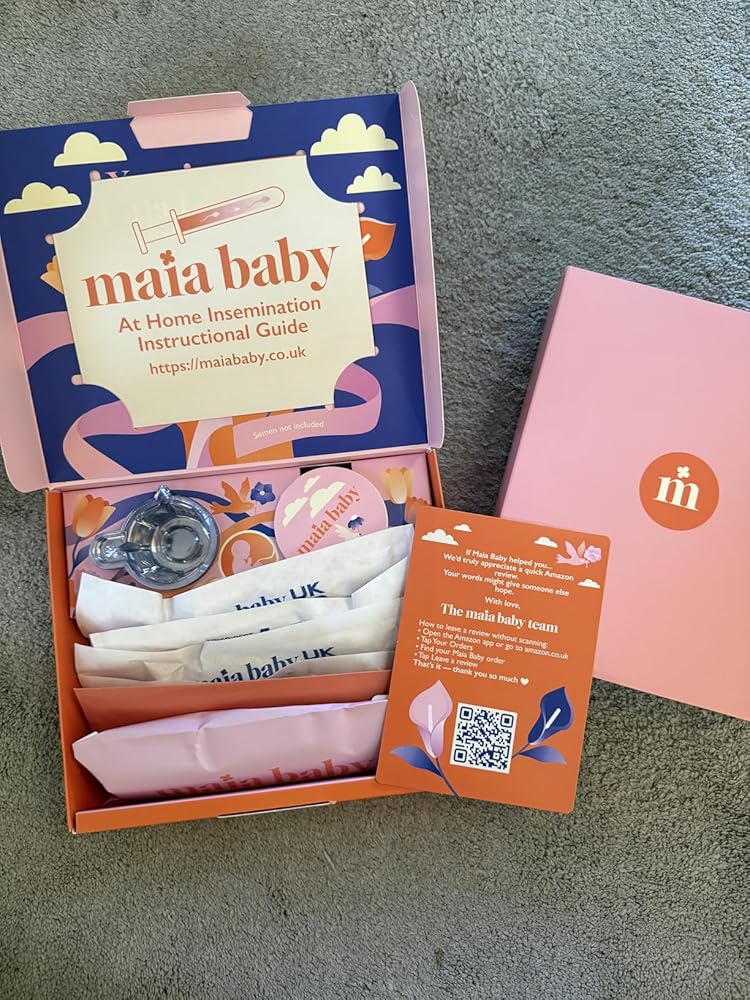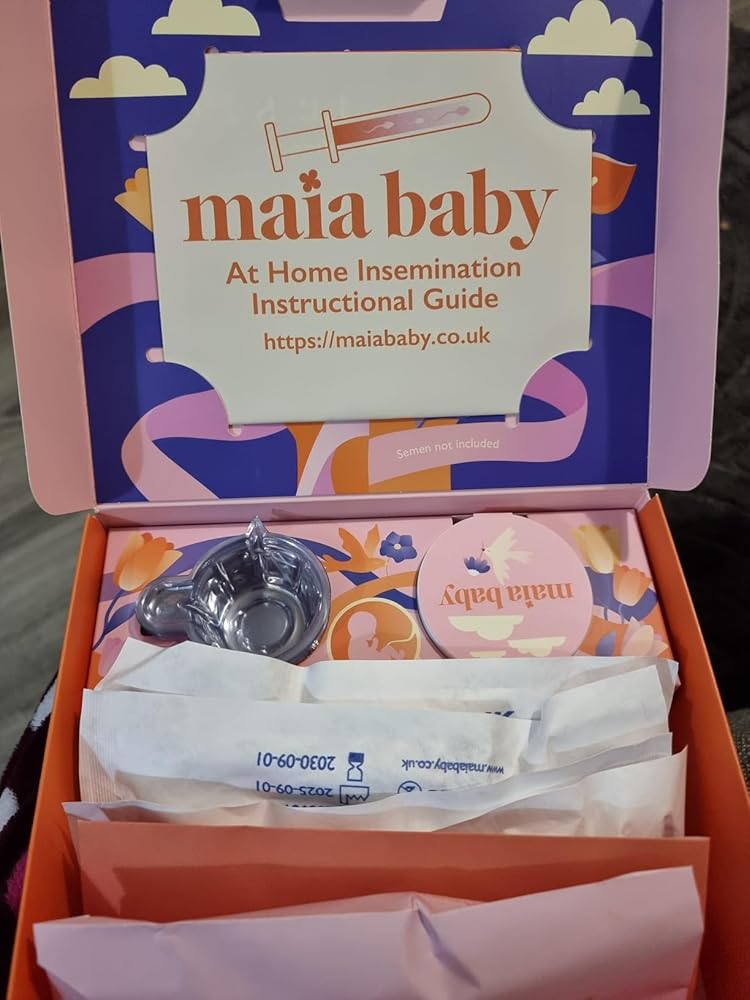


You can find a sperm donor in the UK in four ways: through a UK licensed sperm bank or clinic, through sperm imported from an overseas bank into a licensed clinic, by taking a donor you already know to a licensed clinic, or through a private arrangement with home insemination. The first three run through a clinic licensed by the HFEA, the UK's fertility regulator. That one detail changes almost everything else: screening, legal parenthood, and what your child can find out later.
Search "sperm donor UK" and most results are a bank or clinic describing its own route. So this is a neutral guide to all four: what each costs at 2026 list prices, and what the law and the regulator actually say, in their words rather than mine.
The 2008 Act "extends to England and Wales, Scotland and Northern Ireland" (section 67(1)), so the parenthood rules run across the UK, but not identically: sections 38(3) and 45(3) preserve Scottish rules that treat a child as the child of the parties to a marriage or civil partnership. Related family law differs too: GOV.UK says there are different rules for registering a birth in Scotland and Northern Ireland, and different rules for parental responsibility in Scotland, so take local legal advice if you live there. And if IUI, ICI or MOT are new to you, our fertility terms glossary explains them.
How Do You Find a Sperm Donor in the UK? (The Four Real Routes)
There are four routes to a sperm donor in the UK, and three of them go through an HFEA licensed clinic. The fourth, a private arrangement with home insemination, carries no clinic fee and is the only one the regulator does not oversee.
Four routes to a sperm donor in the UK compared (prices as listed on 19 September 2026)
| 1. UK licensed sperm bank or clinic donor | 2. Imported sperm via a UK licensed clinic | 3. Known donor via a UK licensed clinic | 4. Known or online-matched donor, home insemination | |
|---|---|---|---|---|
| Cost of the sperm or donor work-up | £1,425 to £1,800 for the donor sperm: London Sperm Bank £1,800 per vial (3 for £4,860); Semovo £1,495 per vial, no family slot or admin fee, free UK shipping except to Northern Ireland; Manchester Fertility lists donor sperm at £1,425 as an added cost on a treatment cycle, and includes it in its IUI packages | European Sperm Bank: €1,150 to €1,375 per ID Release MOT20+ straw, plus €550 UK Pregnancy Slot, €315 European shipping, 20% UK VAT. Cryos: most straws EUR 100 to EUR 1,000 excl. VAT, plus an ID Release quota reservation of EUR 350 where the treatment country requires one, then 20% UK VAT and duty fees at UK customs. Clinic import fee example: £200 plus courier (Manchester Fertility). Euros not converted | Manchester Fertility example: £189 semen analysis, £285 donor consultation, £95 implication counselling, £1,240 initial screening, £380 re-screen after 3 months, £415 semen freeze, £425 per year storage | No good data: no published price list exists. HFEA: the saving "could be outweighed by risk of significant lifelong consequences and costs" |
| Cost of treatment | IUI with donor sperm included: £2,795 single cycle, £5,695 for three (Manchester Fertility) | Same clinic fees as route 1, sperm bought separately | IUI using a known donor: £1,350 single cycle, £3,605 for three, plus the work-up above (Manchester Fertility) | No clinic fee. No good data on other costs |
| NHS funding | IUI "is not routinely offered on the NHS" (NHS). South East London ICB funds up to 6 donor IUI cycles for eligible patients, but "the donor sperm will need to be sourced and paid for by the patient" | As route 1: the patient normally buys the sperm (SEL ICB, Gateshead Health) | No good data | Not applicable |
| Donor screening | Negative for HIV 1 and 2, hepatitis B, hepatitis C, syphilis. Sperm "quarantined for a minimum of 180 days, after which repeat serological testing is required", or "a minimum of three months" where NAT testing is also used (HFEA Code of Practice) | Must "meet the UK requirements on screening" (HFEA Direction 0006) | "they'll go through all the same checks" (HFEA) | None guaranteed: "you can't be sure that the donor has undergone rigorous screening and quality checks" (HFEA) |
| Legal parents | Birth mother is the mother (HFEA). Donor "is not to be treated as the father" (s.41(1)). Spouse or civil partner is the second parent unless they did not consent; an unmarried partner only if both sign the clinic's consent forms before treatment (HFEA) | Same as route 1 | Same as route 1, provided the clinic consents are in place (HFEA) | Birth mother is the mother (HFEA). Not married or in a civil partnership: "the donor will be considered the legal parent of any children you might have" (HFEA). Married or in a civil partnership at the time of artificial insemination: the spouse or civil partner "is to be treated as a parent of the child unless it is shown that she did not consent" (s.42(1); s.35 for a male spouse). An unmarried partner cannot become a legal parent this way. Get legal advice |
| Anonymity and identity release | No anonymous donation. Non-identifying information at 16; name, date of birth and last known address at 18. Parents never get identifying information (HFEA; 2004 Regulations) | Same: import is only allowed if the donor is "identifiable" (HFEA Direction 0006), so overseas "Non-ID Release" donors cannot be used | Identity already known. Donor is still registered with the HFEA, so the child has the same access | No HFEA record: "your child will have no means of finding out about the donor or making contact with them in later years" if he ends contact (HFEA) |
| Family limit | Up to 10 families in UK licensed clinics, or a lower limit set by the donor (HFEA) | 10 families within the UK, but "there is no global limit" (HFEA). European Sperm Bank: most donors have a worldwide limit of 75 families | 10-family limit applies to his clinic donations, but "Some donors may donate both privately and through a licensed clinic" (HFEA) | None: "The 10-family limit does not apply" (HFEA) |
Sources, all seen 19 September 2026: price lists from London Sperm Bank, Semovo, Manchester Fertility (active 1 April 2026), European Sperm Bank and Cryos; the SEL ICB fertility policy (July 2024) and Gateshead Health (May 2024); the HFEA Code of Practice (2024) and General Direction 0006. HFEA, NHS and legislation pages are linked in the sections below. Each price is one provider's list price, not a national average.
The short version: UK clinics and banks listed donor sperm at £1,425 to £1,800, clinic sperm is quarantined for a minimum of 180 days, or three months where NAT testing is also used, the UK limit is 10 families, and a donor-conceived child can ask for identifying details at 18. A private arrangement guarantees none of that.

Try It: Compare the Four Routes on What Matters to You
The table is a lot to take in on a phone. Tick what matters most to you below and you'll see the same table cells, route by route, in the same words. It doesn't rank the routes or choose one for you.


Compare the Four Routes
Tick what matters most to you. For each one, you'll see what the table above says about all four routes, in the same words. It doesn't rank the routes or pick one for you.
Tick one or more boxes above to compare the four routes.
What the HFEA says about route 4 (a private arrangement): "It's always safer to have treatment with donor sperm at a HFEA licenced clinic, where there are laws and guidance to protect and support patients and donors." (Clare Ettinghausen, HFEA, 12 February 2025)
Not legal advice: This is general information, not legal advice. The 2008 Act extends to England and Wales, Scotland and Northern Ireland, but parts of it work differently in Scotland, and related family law differs in Scotland and Northern Ireland. Anyone using a known donor should take advice from a family-law solicitor before trying.
When to see a GP: See a GP if you have not conceived after 6 cycles of insemination, or straight away if you are 36 or over or know of something that could affect your fertility.
How Much Does a Sperm Donor Cost in the UK in 2026?
UK donor sperm was listed at £1,425 to £1,800 on 19 September 2026: £1,800 a vial at London Sperm Bank, £1,495 a vial at Semovo, and £1,425 at Manchester Fertility, which lists donor sperm as an added cost on a treatment cycle rather than a vial price. Clinic treatment is charged on top.
With overseas banks, the straw price is only part of the bill: European Sperm Bank's €1,150 to €1,375 for an ID Release MOT20+ straw comes before the €550 UK Pregnancy Slot, €315 shipping and 20% UK VAT. I've left euros as euros, because I haven't verified an exchange rate. There is no reliable figure for private donors, so I haven't given one.
👉 For treatment prices and the wider picture, see our guide to artificial insemination costs in the UK.
Is Donor Sperm Free on the NHS? (Usually Not, Even When Treatment Is)
Usually not. The NHS says IUI "is not routinely offered on the NHS and you may have to pay for it privately", and even where treatment is funded, the sperm itself often is not.
Gateshead Fertility tells patients "even if you are receiving NHS-funded treatment, you will need to self-fund the purchase of the sperm". Policy varies by Integrated Care Board, so the NHS says to "Ask a GP or check with your local Integrated Care Board".
The NHS is also clear about where donor sperm has to go: "If you're using donor sperm you'll need to go through a licensed fertility clinic, even if your donor is someone you know." It says "Over half of women under 40 using IUI will get pregnant within 6 cycles."
Who Is the Legal Parent When You Use a Sperm Donor?
At a UK licensed clinic, the sperm donor is not the legal parent. With home insemination, it depends on whether the birth mother is married or in a civil partnership at the time. To be honest, this is the section I'd read twice, because a signed agreement with the donor does not settle it.
The woman who gives birth is always the legal mother. Those are the HFEA's words, and of a private arrangement it says "you will always be the child's mother". Section 33(1) of the Human Fertilisation and Embryology Act 2008 puts that in statute where an embryo, or sperm and eggs, are placed in her: "The woman who is carrying or has carried a child as a result of the placing in her of an embryo or of sperm and eggs, and no other woman, is to be treated as the mother of the child."
At a licensed clinic, the donor is not the father. Under section 41(1), where a man's sperm is used with the consent the law requires for licensed donation, "he is not to be treated as the father of the child." The HFEA says a licensed-clinic donor will not:
- be the legal parent of the child born
- have any legal obligation to the child
- be named on the birth certificate
- have any rights over how the child will be brought up, or be required to support the child financially
That covers a known donor too, provided the clinic consents are in place.
If you are married or in a civil partnership. Section 42(1) says that where the birth mother had a female spouse or civil partner at the time of her artificial insemination, "the other party to the civil partnership or marriage is to be treated as a parent of the child unless it is shown that she did not consent to the placing in W of the embryo or the sperm and eggs or to her artificial insemination (as the case may be)." Section 42(2) says this applies "whether W was in the United Kingdom or elsewhere". Section 35 is the equivalent for a male spouse or civil partner. Where the spouse or civil partner is the parent under those sections, sections 45(1) and 38(1) mean no other man is the father.
If you are not married or in a civil partnership and inseminate at home. The HFEA puts it plainly: "If you're a single patient or in a same sex couple and you're not married or in a civil partnership, the donor will be considered the legal parent of any children you might have." It adds: "This will give him rights over, and responsibilities for, your child."
If you have an unmarried partner. Under sections 36 to 37 and 43 to 44, an unmarried partner only becomes the second legal parent where the insemination was "in the course of treatment services provided in the United Kingdom by a person to whom a licence applies" and both of you gave signed written notices beforehand. In practice those are the clinic's consent forms, which the HFEA explains here. An unmarried partner cannot become a legal parent this way through home insemination.
The method matters as well. Sections 35 and 42 refer to artificial insemination, and the HFEA says the position can depend on "whether the insemination took place through artificial insemination or sexual intercourse".
Donor and co-parenting agreements. If you are thinking about co-parenting with a sperm donor, the HFEA says: "These agreements are not legally binding and you should seek independent legal advice before drawing one up." It tells donors who donate outside a clinic: "You cannot opt out of being the legal father of the child, even if the mother agrees to that."
This is general information, not legal advice. The 2008 Act extends to England and Wales, Scotland and Northern Ireland, but parts of it work differently in Scotland, and related family law differs in Scotland and Northern Ireland. Anyone using a known donor should take advice from a family-law solicitor before trying.
For a lived example of two mums using a donor, our real story Two Mums, Third Try is worth a read.
Can a UK Sperm Donor Be Anonymous?
No. The HFEA says "most people conceived from donations made after 1 April 2005 will be able to find out their donor's name, date of birth and last known address when they turn 18". It also warns donors that home DNA testing could identify them earlier.
Under the Disclosure of Donor Information Regulations 2004, for information the donor provided "after 31st March 2005", what the HFEA must give an adult applicant includes "the surname and each forename of the donor", "the date of birth of the donor and the town or district in which he was born", "the appearance of the donor" and "the last known postal address of the donor".
- At 16, a donor-conceived person can request non-identifying information (section 31ZA of the 1990 Act). Identifying information cannot be given to an applicant under 18.
- Parents never get identifying information. The HFEA says they can see non-identifying details such as a physical description, ethnicity, medical history and a goodwill message.

If you would rather hear this side of it talked through, Angela Pericleous-Smith, Chair of the British Infertility Counselling Association (BICA), explains what a donor-conceived person may want to think about before applying for information about their donor, in this short video from the HFEA.
What Is the 10-Family Limit, and Does It Cover Imported Sperm?
A donor's sperm "can only be used to create up to 10 families" at UK licensed clinics, and the limit stops there. It does not cover the rest of the world or private donation.
- The limit sits in the HFEA Code of Practice (paragraph 11.56), which is regulator guidance, not a section of the Act.
- Imported sperm has no worldwide cap. The HFEA says: "No, there is no global limit on how many families can use the same donor." European Sperm Bank says "The majority of our donors have a limit of 75 families" worldwide.
- Private donation has no cap. The HFEA says: "The 10-family limit does not apply to donors who donate outside of a licensed clinic through a private arrangement."
Imports were a big share of UK donation in 2020, and they can only come into a licensed clinic from an identifiable donor. The HFEA's donation trends report found "over half (52%) of newly registered sperm donors in 2020 were from donor imports, an increase from around a quarter (22%) in 2010".
What Do the Law and the HFEA Say About a Private Sperm Donor and Home Insemination?
Using a private sperm donor at home is not a criminal offence for the recipient, but the HFEA's position is that a licensed clinic is safer, and a clinic's legal protections do not apply. Clare Ettinghausen, the HFEA's Director of Strategy and Corporate Affairs, said in a statement on 12 February 2025: "It's always safer to have treatment with donor sperm at a HFEA licenced clinic, where there are laws and guidance to protect and support patients and donors."
What is and is not an offence. The HFEA's FAQs on unregulated sperm donation say: "using an unregulated donor is not a criminal offence, and you are not breaking the law, but the donors or other people involved in the process of making the sperm available may be committing a serious crime."
The offence sits in section 4 of the Human Fertilisation and Embryology Act 1990. Section 4(1)(a) says no person shall "store any gametes" except in pursuance of a licence. Section 4(1A) says: "No person shall procure, test, process or distribute any gametes intended for human application except in pursuance of a licence or a third party agreement." Under section 41(4) of the 1990 Act, the penalty on indictment is up to two years' imprisonment or a fine or both. One of the HFEA's examples of unlicensed activity is "Arranging for sperm to be delivered to someone".
Apps, websites and social media. The same FAQs say: "The HFEA is concerned that apps, websites, or social media sites helping exploitative or serial sperm donors expose people to serious medical, legal, and emotional risks that could have lifelong impacts." They add: "Some serial unregulated donors have led to more than 200 children in the UK."
"Natural insemination". On the claim that sex works better, the HFEA says: "This is not true and no one should feel pressured into having sex with a stranger".
Legal parenthood is covered in the section above. The HFEA also points out that a donor you already know can donate through a clinic instead. For people not using a clinic, the HFEA signposts the Donor Conception Network, BICA counsellors and the BACP. As above, this is general information, not legal advice.
What Might Change? (The HFEA's Law Reform Proposals)
Nothing has changed yet. In November 2023 the HFEA published its Modernising fertility law recommendations, including that "The Act should be amended to enable the removal of donor anonymity from the birth of any child born from donation".
That is a recommendation to government, not law. The HFEA says in the same report that "any further updates to the Act are decisions for government and ultimately parliament".
No Government Bill to implement those recommendations has followed. A backbench Ten Minute Rule Bill, the Human Fertilisation and Embryology (Regulation) Bill, which would have extended HFEA regulation to online providers of fertility services, had its first reading on 15 July 2025, in the 2024 to 2026 session. It never got a second reading and was not carried over, so it fell when that session ended. Bills of that kind rarely become law, so the rules in this article are the ones that apply today.
When Should You See a GP or Get Something Checked?
See a GP if you have not conceived after 6 cycles of insemination, or straight away if you are 36 or over or know of something that could affect your fertility. Those thresholds come from NICE guideline NG257 (March 2026).
- After 6 cycles without success. For someone using artificial insemination, NICE says to offer further clinical assessment and investigation "if they have not conceived after 6 cycles of insemination". That replaces the usual one-year rule.
- Sooner if you are 36 or over, or there is a known cause. NICE says to offer specialist referral at presentation if the person trying to become pregnant "is aged 36 years or over", or there is "a suspected or known clinical cause of infertility or a history of predisposing factors".
- What comes next. NICE then says to "offer 6 cycles of unstimulated donor IUI" before considering IVF.
- Any infection worry after using unscreened sperm. The HFEA warns of "catching an infectious disease, a sexually transmitted infection" from unregulated donors. See your GP or a sexual health clinic and ask about testing.
- Safety red flags with an online donor. Pressure for "natural insemination", or refusing to show test results. If you believe activity falls outside the law, the HFEA says "you should contact the police as soon as possible".
- If you are on stimulation drugs for clinic IUI. The NHS says to contact your fertility clinic or NHS 111 as soon as possible if you have pain and bloating in your tummy, are feeling and being sick, feel faint or are coughing up blood, and to call 999 or go to A&E if you have difficulty breathing, pain in your chest or upper back, are very thirsty and peeing less than usual, or have swelling in any part of your body.
Our guide to the best time to inseminate covers timing while you count cycles.
The Part No Price List Covers
Every route here ends in the same place: a child who may one day want to know where they came from, and a family that needs to be secure in law.
It's easy to get pulled into vial prices and section numbers, but nobody reading this is really shopping. You are trying to build a family.
So take your time, and get proper advice first. It's a big decision. It's allowed to feel like one.
Sperm Donor UK: Frequently Asked Questions
How much does a sperm donor get paid in the UK?
Sperm donors are compensated, not paid a fee. The HFEA's General Directions 0001 (version 5, issued 1 October 2024) say: "Centres may compensate sperm donors a fixed sum of up to £45 per clinic visit." That rose from £35 on 1 October 2024. The HFEA adds: "It's illegal to pay sperm donors more than their reasonable expenses."
How much does it cost to buy donor sperm in the UK?
As listed on 19 September 2026, UK prices were £1,800 a vial at London Sperm Bank and £1,495 a vial at Semovo; Manchester Fertility listed donor sperm at £1,425 as an added cost on a treatment cycle. European Sperm Bank listed €1,150 to €1,375 per ID Release MOT20+ straw before its €550 UK slot, €315 shipping and 20% VAT. Treatment is extra. Our insemination cost guide covers that side.
Is sperm donor free on NHS?
Usually not. The NHS says IUI "is not routinely offered on the NHS and you may have to pay for it privately". Even funded treatment often excludes the sperm: South East London ICB funds up to 6 cycles of donor IUI for eligible patients, but the patient sources and pays for the donor sperm. Policy varies by Integrated Care Board.
Is there a downside to being a sperm donor?
There are things to weigh up, according to the HFEA. You cannot donate anonymously at a UK clinic, so anyone conceived can apply for your name, date of birth and last known address at 18. Donating takes weekly clinic visits for three to six months, plus health tests, and you should tell the clinic about problems in your or your family's medical histories.
Keep Reading: Helpful TTC Guides
These guides cover the questions that tend to come next.
- Artificial insemination cost in the UK: real prices and what to expect
- Two Mums, Third Try: a real story of two mums using a donor
- Best time to get pregnant: when to inseminate for conception
- Fertility terms explained: the complete TTC glossary