

The moment you decide to actually start trying to conceive, everything you thought you knew about your body gets thrown out the window. We definitely felt that. Here's what actually helped us in those first few months, not the version that gets you the most likes on a fertility app.
Trying to Conceive: The Excitement (and Everything That Came Flooding In)
When Sarah and I decided we were ready, the first few days felt almost giddy. We told close friends. We half-joked about names. Then, almost immediately, the practical brain took over from the excited one.
I opened three apps in one evening, read about twelve different supplements, and genuinely thought I'd made things worse by looking anything up at all. Every article seemed to contradict the last one. One site said start folic acid three months before trying. Another said timing sex mattered more than anything else. A third suggested cutting out entire food groups "just in case." None of it was sourced. All of it was written with total confidence.
To be honest, I'd assumed getting pregnant would just... happen, once we stopped preventing it. That's not wrong exactly, but it's not the full picture either. What actually mattered more than "trying every day" was understanding roughly when in the cycle trying gave us a real chance, and letting go of the idea that more effort, more supplements, or more tracking automatically meant more control. It doesn't. It mostly just meant more noise.
👉 The research rabbit hole feels productive. Mostly it's just a place to put anxious energy while you wait for your body to do something it was always going to do in its own time.
Understanding Your Fertile Window (The Thing We Wish We'd Learned Sooner)
Your fertile window is mainly the days around ovulation, not the whole month. As Tommy's, the UK pregnancy charity, explains, you're most fertile in the roughly 5 days before you ovulate, on the day itself, and up to a day after, since sperm can survive up to 7 days inside your body even though the egg itself is only viable for a short window once it's released. Ovulation usually happens around 12 to 16 days before your next period starts, according to the NHS's own guidance on trying to get pregnant.
The number everyone quotes is a 28-day cycle with ovulation on day 14, and we used that as a rough starting map too. But it's worth saying plainly: a "normal" cycle can run anywhere from about 21 to 35 days, and ovulation moves around depending on where you sit in that range. If your cycle runs shorter or longer than 28 days, ovulation isn't fixed at day 14 for you, it shifts with your own cycle length. This tripped us up in month one, when I assumed everyone's "day 14" was the same day 14.

The NHS's page on fertility across the menstrual cycle also notes a genuinely useful physical sign: around ovulation, cervical mucus becomes thinner and stretchy, a bit like raw egg white. That was more reliable for us early on than any app prediction, mostly because it didn't depend on us remembering to log anything the night before.
👉 You don't need to be perfect every single day of the month. You need to be reasonably consistent in the days leading up to and including ovulation.
Tracking Ovulation Without Losing Your Mind
We tried LH ovulation strips, a couple of apps, and paying attention to cervical mucus. Honestly, all three roughly agreed with each other most months, which was reassuring. Best Time to Get Pregnant goes into the actual mechanics of this in more depth than I can here.
Each method has a real trade-off, and nobody tells you this upfront. LH strips are the most precise about timing, but they need daily testing around the same time of day, and results can be genuinely hard to read when a line is "nearly as dark" versus "as dark as." Apps are the easiest to use day to day, but most of them are only as good as the data you put in, and a predicted ovulation day is still a prediction, not a fact. Cervical mucus is free and doesn't need any kit at all, but it takes a cycle or two to learn what your own body's pattern actually looks like, and it's the easiest of the three to second-guess. Cleveland Clinic's own breakdown of at-home ovulation tests is a genuinely good second opinion if you're still deciding which method to start with.
A real fertility specialist walks through the fertile window and cycle tracking in more depth here, worth a watch:
Watch on YouTube: Understanding the Fertility Window | City Fertility

What I'd say now, looking back: pick one method and stick with it for a few cycles before switching. Chopping and changing every month just adds noise, not clarity. If you do want to combine methods, combine LH strips with mucus, since they're measuring two genuinely different things, rather than running three apps that are all guessing off the same limited data. NHS 111 Wales's ovulation calculator is a real, free tool if you want a second estimate alongside whatever method you're using.
What Actually Happens After Sex
We got curious about the mechanics of this eventually, so here's the plain version. Millions of sperm are released, but only a small fraction ever make it past the cervix. The ones that do can survive up to 7 days waiting for an egg to arrive, moving into the fallopian tubes within minutes to hours. If an egg has been released, fertilisation usually happens in the fallopian tube itself, not the uterus, generally within about 24 hours of ovulation.

None of this needs you to do anything differently. It happens on its own, whether you're paying close attention or not. There's no special position, no lying-down ritual, no breath-holding that meaningfully changes any of the steps above, which was oddly one of the more relaxing things we learned early on. The mechanics don't need your help. They just need the timing to be roughly right. How Long Do Sperm Stay in the Body? goes deeper into the survival window itself if you want the full picture.
What We Actually Changed in Those First Few Months
We didn't overhaul everything overnight. The changes that actually stuck were small, boring, and honestly a bit unglamorous:
- Cutting back on alcohol, not eliminating it entirely, just being more conscious of it. We stopped drinking on weeknights first, which felt manageable, before cutting back further as we got closer to what we thought was our fertile window each month.
- More whole foods, less relying on takeaways when we were both tired after work. This wasn't a diet. It was closer to meal-prepping two or three dinners on a Sunday so we weren't deciding what to eat, exhausted, at 8pm on a Wednesday.
- Less heat exposure for me (laptop off the lap, fewer hot baths), something I wrote about properly here once we'd actually seen it through.
- Sharing our medical history with our GP early, not waiting until there was a specific problem to raise. Any medication, any past diagnosis, anything worth flagging is worth flagging before you need it, not after.
- Actually talking to each other about it, not just the logistics of when to try, but how we were both genuinely feeling about the whole thing. This one mattered more than any supplement.

If you want the fuller list of what's actually worth eating more or less of, Eating Well While Trying to Conceive is the real starting point, not a fad diet. And if you're looking for something that reads more like a checklist than an article to keep nearby, that's genuinely useful in the first few months without becoming another thing to obsess over.
The Two-Week Wait Nobody Warns You About
Nobody really tells you that the two weeks after ovulation are their own particular kind of stressful. Every twinge felt like a sign, in both directions. A slightly sore back was either "definitely pregnant" or "definitely getting my period," and there was no reliable way to tell which one it actually was. Two Week Wait Symptoms covers what's actually a sign of anything versus what's just your body doing its normal thing.

What actually helped us get through it wasn't willpower, it was distraction with an actual plan behind it. We tried to book something for ourselves in the middle of the wait, nothing expensive, just something that meant the whole two weeks wasn't spent staring at a calendar. We also agreed on a real testing day in advance, rather than deciding in the moment, which cut down on the daily "should I test today" debate considerably.
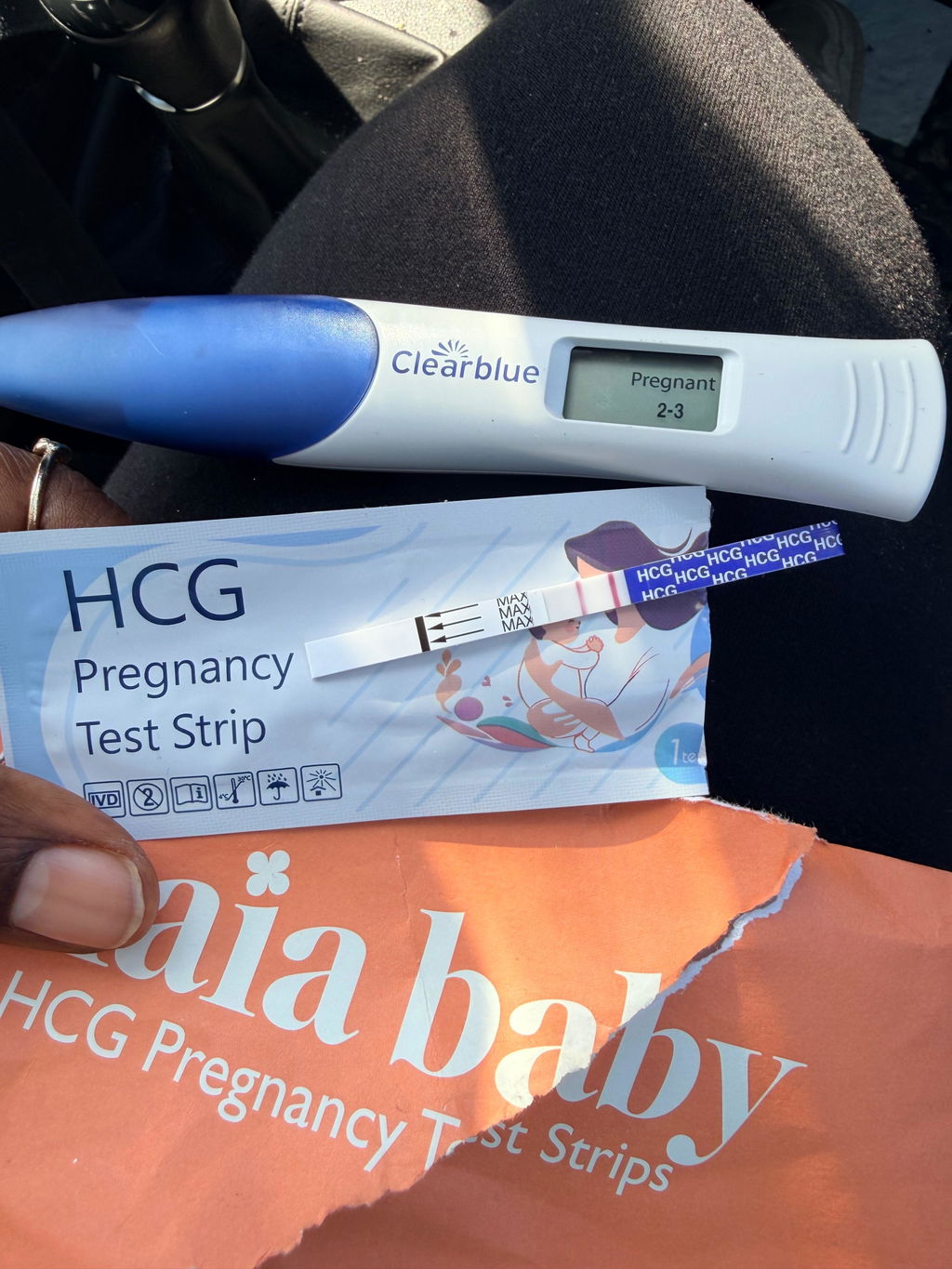
👉 Testing early rarely tells you anything useful. It mostly just gives you more days to worry, and a higher chance of a false negative that feels like bad news when it isn't actually news at all yet. When to Take a Pregnancy Test After Ovulation covers the real timing behind that.
When It's Still Early, Not "Wrong"
This is the bit I wish someone had said to us plainly in month one: most of the time, nothing is wrong yet. The current NICE fertility guidance only offers further assessment after 12 months of regular unprotected sex without conceiving, or straightaway if you're 36 or over. A couple of months of trying isn't a red flag, even though it can feel like one at 11pm scrolling forums.
It wasn't really about doing everything right from day one. It was about giving ourselves the same amount of time our bodies actually needed, without deciding something was broken before there was any real reason to think so. That's a genuinely hard thing to sit with when every app, every ad, and every well-meaning relative seems to be on a different timeline than you are.
Frequently Asked Questions
How long does it usually take to get pregnant?
For most couples under 35 having regular unprotected sex, conception happens within 12 months. It can take longer, and that alone doesn't mean anything is wrong, it's just how wide the normal range genuinely is.
Do I need to track ovulation every single cycle?
Not necessarily. Tracking helps you understand your own pattern, but once you have a reasonable sense of your fertile window, you don't need to obsessively log every cycle to keep trying effectively.
What should we actually avoid when trying to conceive?
Heavy alcohol, smoking, and excess heat exposure (hot tubs, laptops on the lap) are the well-established ones worth actually changing. Most other "avoid this" advice online is far less evidence-backed than it sounds.
Is it normal for cycle length to vary month to month?
Yes. Even a genuinely regular cycle can shift by a few days here and there, and a "normal" cycle length can fall anywhere between about 21 and 35 days. If yours doesn't land on exactly 28 days, that alone isn't a sign of a problem.
Should we time sex around ovulation every month, or just have regular sex?
Regular sex every two to three days across the cycle covers the fertile window without needing to hit one exact day. Some couples prefer to track more precisely, others prefer not to, and both are reasonable approaches.
Final Thoughts
The start of trying to conceive is a strange mix of excitement and low-grade anxiety that nobody quite prepares you for. You're hopeful and terrified in the same week, sometimes the same afternoon. You'll read too much some weeks and avoid it entirely other weeks, and both are a completely normal way to cope with something that's mostly out of your hands.
None of this guarantees anything. What it does is give you a real, honest starting point instead of the vague, contradictory advice that's easy to find and hard to actually use. You're doing better than you think you are.
Keep Reading: Helpful TTC Guides
More on what actually helps in the early stages of trying:
- Best Time to Get Pregnant: When to Inseminate for Conception
- Two Week Wait Symptoms
- Eating Well While Trying to Conceive
- How Long Do Sperm Stay in the Body?
- When to Take a Pregnancy Test After Ovulation
- Real Story: Our First Try
📌 This article reflects our personal journey and research. Always consult a medical professional before beginning any treatment.